Can You Actually Improve Reaction Time? (Evidence Review)

If you landed on this page, you've probably already read about this topic elsewhere. And if you have, you've likely found two types of answers. One says yes, absolutely, just practice and you'll get faster. The other says no, reaction time is genetic, you're stuck with what you have. So which is it?
I've spent a lot of time digging into the research on this (partly because I built Cognitive Train and wanted to make sure I wasn't selling snake oil). The honest answer is: yes, you can train it. The reason you see conflicting opinions is that "reaction time" involves multiple components, and some are more trainable than others. Overall, the evidence leans firmly toward yes. Let me break it down.
First, Let's Define What We're Talking About
When people say "reaction time," they usually mean the whole process from stimulus to response. But that process has multiple components, and this matters because some parts are more trainable than others.
There's simple reaction time — you see a light, you click. One stimulus, one response. This is the most "pure" measure of neural speed. Then there's choice reaction time — multiple possible stimuli, multiple possible responses. You have to identify what you're seeing and select the correct action. This involves more cognitive processing.
If you're not sure about the terminology, I wrote a separate piece on the difference between reflexes and reaction time that might help clarify things.
Here's the key insight: even simple reaction time — the most "pure" measure of neural speed — can improve because most people aren't anywhere near their physiological floor. And choice reaction time has even more room for improvement because it involves decision-making, pattern recognition, and motor planning. All of these respond well to training.
What the Research Says About Training
Let's look at what actually happens when people practice reaction time tasks.
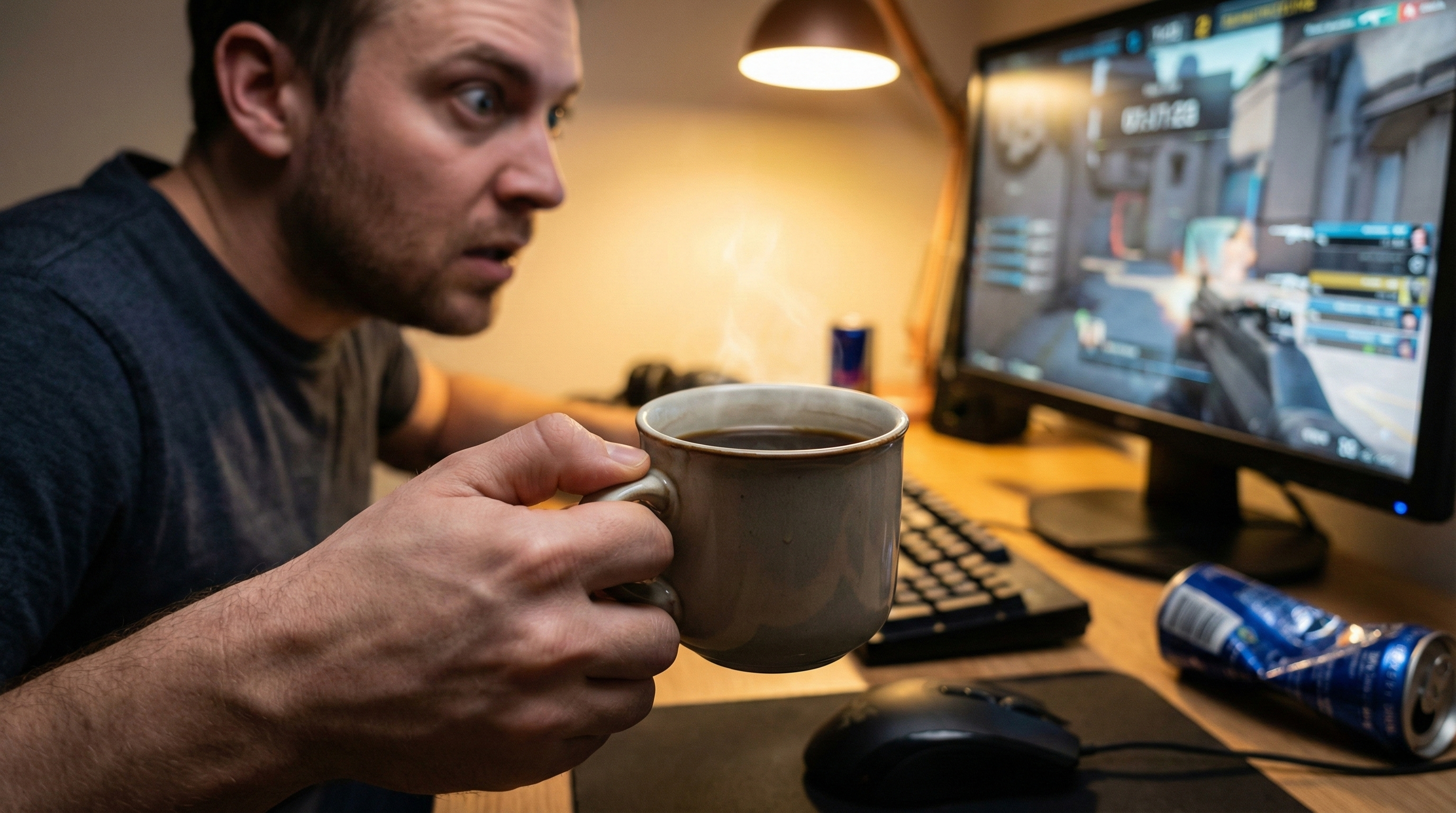
Studies on video game players often find they have faster reaction times than non-gamers. Research published in Current Directions in Psychological Science found that video game players responded 11% faster than non-players across a wide range of tasks, with no loss in accuracy. But here's the question researchers always ask: did gaming make them faster, or do people with naturally fast reactions gravitate toward gaming? Some longitudinal studies suggest it's both — there's self-selection, but training effects are real too.
Athletes show similar patterns. A baseball player tracking a 95 mph fastball isn't actually reacting faster in the pure neurological sense. What they've developed is better anticipation, better pattern recognition, and more efficient motor responses. They've learned to read the pitcher's body language, predict the pitch type, and pre-load their swing mechanics. By the time the ball leaves the pitcher's hand, they've already made half the decision.
This is actually good news. It means even if your raw neural speed is average, you can still perform like someone with elite reactions by improving the cognitive components.
The Trainable Components
Based on the research, here's what you can realistically improve:
Anticipation and prediction. This is huge. Elite performers in every field don't just react — they predict. Training helps you recognize patterns faster and start preparing your response before the stimulus fully appears. This is why baseball players and tennis players can return balls that seem physically impossible to reach.
Decision speed. When you have to choose between multiple responses, practice dramatically reduces the time needed to select the right one. This is where choice reaction time training really shines. The more familiar you are with the stimulus-response mappings, the faster you can execute them.
Motor efficiency. Your muscles and neural pathways become more efficient with practice. The movement itself gets faster and more precise. This is basic motor learning — nothing controversial about it.
Inhibitory control. Sometimes the fastest reaction is no reaction. Learning to suppress incorrect responses is a skill. Athletes who false start have failed at inhibition. Training with go/no-go tasks specifically targets this ability.
Attention and alertness. If you're not paying attention, your reaction time suffers dramatically. Training can improve your ability to maintain focus and stay in a ready state. Anyone who's experienced sleep deprivation knows how much attention affects reaction speed.
What About Pure Neural Speed?
Here's where I have to be honest. The absolute floor of simple reaction time — the speed at which signals travel through your nervous system — is largely determined by genetics and physiology. You can't really train your neurons to conduct electricity faster.
However, most people aren't anywhere near their physiological floor. There's a difference between your theoretical minimum reaction time and your practical everyday reaction time. Training closes that gap.
Think of it like running. Everyone has a genetic ceiling for sprint speed. But very few people are actually running at their genetic potential. Training doesn't change your ceiling, but it gets you closer to it. Same with reaction time.
The Age Factor
I have to address this because it's a common concern. Yes, reaction time naturally slows with age. A study analyzing over 3,300 StarCraft 2 players found that cognitive-motor decline begins around age 24. (I wrote more about this in aging and reaction time.)
But here's the encouraging part: training effects persist across age groups. A systematic review found that stepping interventions reduced falls among older adults by approximately 50%, which may be due in part to improvements in reaction time. Another study showed older adults who participated in a 20-week exercise program improved their reaction time compared to controls. They may not reach the same absolute speeds as younger people, but they show meaningful improvements. In other words, training works at any age — you're not too old to get faster.
Also worth noting: the cognitive components (anticipation, decision-making, pattern recognition) can actually improve with age and experience. A 40-year-old athlete might have slower raw reaction time than their 22-year-old self, but their game sense and anticipation can more than compensate.
What Kind of Training Actually Works?
Not all reaction time training is equal. Here's what the evidence supports:
Specific practice beats general practice. If you want faster reactions for a specific activity, train that activity. A goalkeeper should train goalkeeper-specific scenarios, not just generic click-speed tests. That said, general reaction training can improve the underlying cognitive skills that transfer across domains.
Varied training beats repetitive training. Your brain adapts to specific patterns. If you only ever react to the same stimulus in the same way, you get really good at that one thing but don't build transferable skills. Mix up your training — different stimuli, different response types, different timing intervals.
Progressive difficulty matters. Like any training, you need to challenge yourself appropriately. If it's too easy, you're not improving. If it's impossible, you're just frustrated. Good training adjusts difficulty based on your performance.
Consistency beats intensity. Short, regular sessions work better than occasional long sessions. Ten minutes daily beats an hour once a week. Your brain consolidates learning during rest, so spacing out practice is more effective.
Realistic Expectations
Let me set some realistic expectations so you don't get discouraged.
Research shows improvements of 5-27% in reaction time tasks with dedicated training. A study of 81 athletes achieved a mean reduction of more than 10% in eye-hand coordination reaction time through vision training over 12 weeks. Young fencers who received specific reaction time training over 9 weeks saw significant improvements in both simple and choice reaction times. That might not sound like much, but consider: if your reaction time is 300ms and you improve by 15%, you're now at 255ms. That's 45 milliseconds. In many real-world situations — driving, sports, gaming — 45 milliseconds is the difference between success and failure.
The improvements are also task-specific at first but become more general with varied training. And importantly, the gains are relatively stable. You don't lose everything the moment you stop training, though you will see some regression over time without maintenance practice.
What Can Sabotage Your Reaction Time
While we're talking about improvement, I should mention things that make reaction time worse — because avoiding these is often easier than training for improvement.
Sleep deprivation is probably the biggest one. According to Harvard Medical School, staying awake for 17-19 hours slows reaction time by about 50% compared to being well-rested, and 24 hours of continuous wakefulness produces impairment equivalent to a blood alcohol level of 0.10% — beyond the legal limit. Chronic sleep debt is even worse. If you're training reaction time while sleep-deprived, you're fighting yourself.
Caffeine is complicated — it helps in moderate doses but the effect diminishes with habitual use. Alcohol obviously impairs reaction time significantly. Even mild dehydration can slow you down.
Stress and anxiety create interesting effects. Moderate arousal improves reactions; too much impairs them. This is the classic inverted-U relationship. Learning to manage your arousal level is itself a trainable skill.
My Recommendation
So, can you improve your reaction time? Yes. But with caveats.
You probably won't turn average reactions into elite reactions through training alone. Genetics plays a real role. But you can absolutely become meaningfully faster than you are now, especially if you've never specifically trained reaction speed before.
The biggest gains come from training the cognitive components — anticipation, decision-making, inhibition — rather than just raw click speed. Use varied, progressive training that challenges different aspects of reaction. Be consistent with regular short sessions over time. And don't sabotage yourself with sleep deprivation, poor hydration, or excessive stimulant tolerance.
If you want to see where you currently stand, try our reaction time test for a baseline. Then explore specific training tools: the sprint start reaction test for explosive reaction speed, the go/no-go test for inhibitory control, or the choice reaction test for decision speed. If your sport involves starting from a set position (sprinting, swimming), the go/no-go false start reaction test in our Sports hub is specifically designed for that.
For a complete training approach, check out my guide on how to train reaction time for free.
The evidence says improvement is real. Not unlimited, not magical, but real. And in a world where milliseconds matter — whether you're driving, playing sports, gaming, or just trying to catch that elevator door — even modest improvements are worth pursuing.