You Feel You Can't React as Fast as You Get Older? You Can Actually Train to Get Faster
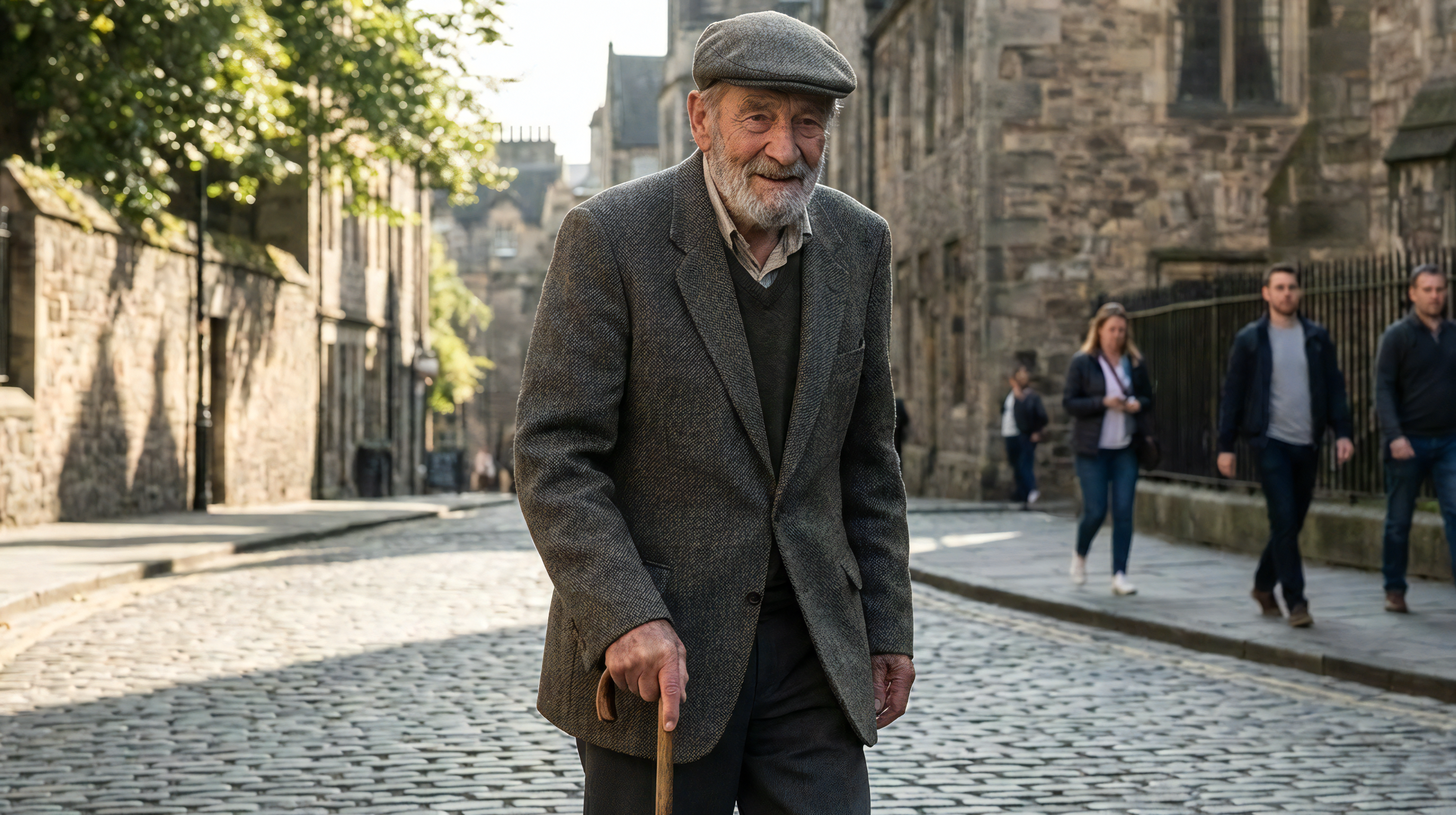
Imagine this situation. You're walking down the stairs, and you miss a step. Something you didn't think much of when you were younger, because you could easily catch yourself and adjust your balance - no big deal. You might have needed to grab a railing sometimes, but often you didn't. But this time, you're just a bit too slow. You stumble, maybe even fall. Or you're driving, and someone cuts in front of you. You know you need to brake, but your foot takes just a fraction longer to move. That split-second delay that wasn't there when you were younger. You didn't hit them this time, but that was too close for comfort.
Do these situations sound familiar? If you're over 50 (or even over 40), you've probably noticed this. Things that used to be automatic now feel just a bit... delayed. Your kids or grandkids might even joke about it (kids are honest but not always kind). You might laugh it off. But deep down, it bothers you. It should not be like this! That feeling of not being as sharp as you used to be.
Why is it happening? It's just biology. Your reaction time gets slower as you age. But you don't have to be disappointed, or feel doomed. The good news is, you can actually do something about it. Not back to your 20-year-old self, but significantly better than where you are now. And, as you can think of from the above driving example, it could make a life-or-death difference!
Why Does Reaction Time Slow Down as We Age?
Let's talk about what's actually happening in your brain when you react to something. When you were younger, your neurons (brain cells) fired faster. The connections between them were stronger. Information traveled quickly from your eyes or ears to your brain, so your brain processed it fast, and your muscles responded very fast too. Reaction happens in three stages. Perceiving information, deciding to respond, and actually executing the physical response. In all these stages, everything was much faster.
However, as you age, a few things change. Your neurons don't fire as quickly anymore. The protective coating around nerve fibers (called myelin) starts to thin too, so signals travel slower. Your brain takes a bit longer to process information or decide something. And your muscles respond a bit slower too. It's like your whole system is running on slightly lower bandwidth. It's like your internet gets slower and your phone or computer also gets slower - double whammy.
Research shows that reaction time slows by 3 to 6 milliseconds per year as we age. According to research published in the Journal of Motor Behavior (2020), the average adult reaction time is around 250 milliseconds. As you get older, that number tends to increase. That might not sound like much, but in a real-world emergency, those fractions of a second matter.
But here's something you might not know: a lot of this slowdown isn't inevitable. Part of it is just... disuse. As your life itself gets calmer (you're not as active as a college student), you have fewer opportunities to actually use this reaction system. Anything that is not used often gets rusty, and reaction time is no exception.
Does It Really Matter That Much?
You might be thinking, "Okay, so I'm a bit slower. I can live with that. I just need to be more careful."
And sure, that's true to some extent. You can compensate by being more cautious. But here's the problem: you don't really know when you need to react fast. If you knew, you wouldn't have to "react" in the first place.
Think about driving again. You're careful, you follow the rules, you keep your distance. But then a kid runs into the street chasing a ball. Or a car in front of you brakes suddenly. Or a deer (or a dog or whatever) jumps out. In those moments, being "careful" doesn't help. You need to react fast. And if your reaction time is 50-100 milliseconds slower than it used to be, that could be the difference between life and death. Not just about your life, but other people's as well.
Or think about walking. You can be as careful as you want, but sometimes you just lose your balance. Maybe the ground is uneven. Maybe you trip on something. In that instant, you need to catch yourself. And if your reactions are too slow, you fall. And at 60 or 70, a fall isn't just embarrassing - it can be serious. Hip fractures, head injuries, loss of independence, are all possible outcomes.
Studies show that seniors with slower reaction times have significantly higher fall risk. In one study, reaction times slower than 454 ms were strongly associated with future falls. Another study found that elderly fallers had reaction times averaging 797 ms compared to 714 ms for non-fallers - that 83 ms difference was the gap between staying upright and hitting the ground.
So yes, it matters. A lot.
The Good News: You Can Train It
Okay, enough doom and gloom. Here's the good news: reaction time is trainable. Even in your 60s, 70s, or beyond, you can improve it with practice.
Multiple studies have demonstrated this. A 20-week exercise program showed improved reaction time and reduced body sway in older adults. Another study found that reaction time exercises significantly improved reaction speed in seniors, reducing fall risk. Even simple practice can make a measurable difference.
I know what you're thinking. "But I'm not an athlete. I'm not going to start doing agility drills or whatever." And you don't have to. You can train your reaction time at home, sitting at your computer or using your phone. It's simple, it's free, and it actually works.
How to Train Your Reaction Time (For Free)
Here's the simplest way to start: on your PC or phone, you see a blue screen. Then, it changes to red after a few seconds (or sometimes faster). When it does, you click or tap as fast as you can. That's it.
Sounds too simple, doesn't it? But this is exactly what you need. It trains your brain to notice a change and respond immediately. No complicated movements, no decision-making - just pure reaction speed.
When you first try it, you might score slower than average. Exact numbers vary between studies due to different testing conditions, but averaging across multiple studies suggests most adults fall in the 250-300ms range. But after practicing regularly, you'll start noticing improvement. With consistent training over several weeks, many people see measurable improvements in their reaction time. That could make a real difference in daily situations!
But What About Real-Life Situations?
Now, you might be thinking, "Okay, but clicking on a screen when it changes color isn't the same as catching myself when I trip, is it?"
Fair point. And you're right - it's not exactly the same. But here's the thing: the fundamental skill is the same. Your brain needs to notice something (a color change, a loss of balance, brake lights ahead) and tell your body to respond. The faster that whole chain happens, the better you react in any situation.
That said, if you want to train more specifically for real-world scenarios, you can. This one adds decision-making. Here, the screen shows you a green mark and red mark one after the other. When it's green you click/tap, when it's red, you don't. This trains you to react quickly but also to hold back when needed. Like when you're driving and you need to decide whether to brake, swerve, or do nothing.
And if you want something more game-like, there's the Multi-Target Aim Trainer. This one trains hand-eye coordination and selective attention - both important for real-world reactions. But it's fun like a shooting video game.
How Much Improvement Can You Expect?
Let's be realistic here. You're not going to get back to your 20-year-old reaction time. That ship has sailed. But you can get significantly better than where you are now.
Research shows that with consistent training, older adults can improve their reaction time. The exercise programs studied typically showed improvements within 8-12 weeks of regular practice. The amount of improvement varies from person to person, but even small gains can make a meaningful difference.
And here's what that means in practice: you'll catch yourself faster when you stumble. You'll brake sooner when something unexpected happens. You'll grab something before it falls. Those small improvements add up to a real difference in your daily safety and independence.
One More Thing: Keep Training
Here's the most important part: you have to keep practicing. If you train for a month, get better, and then stop, you'll lose it again. Your brain needs consistent practice to maintain those faster reaction times. You might think "I don't have the time for that!" but you actually do. One of the reasons your reaction time slowed is reduced activity. And it only takes a few minutes a day. Do this while you're having your morning coffee. You can make it a habit.
Oh I forgot to tell you, these tools are on this website. They are not smartphone apps that would involve downloading or signing up. You don't need any of that. You just need to go to the app page and click or tap Start.
So now, please go ahead and test your reaction time. You can see where you are. Then practice for a week and test again. I think you'll be pleasantly surprised. And hey, maybe your kids won't joke about you being slow anymore. (Okay, they probably still will. But at least you'll know they're wrong.)