Multi-Target Training: Why Filtering Matters More Than Pure Speed
You're clicking fast and hitting targets consistently. Your click speed is solid, your basic aim accuracy is high. But in actual games, you're still clicking the wrong enemies, shooting at decoys, or losing track of priority targets in chaotic fights. The problem isn't your clicking ability—it's your target selection under pressure.
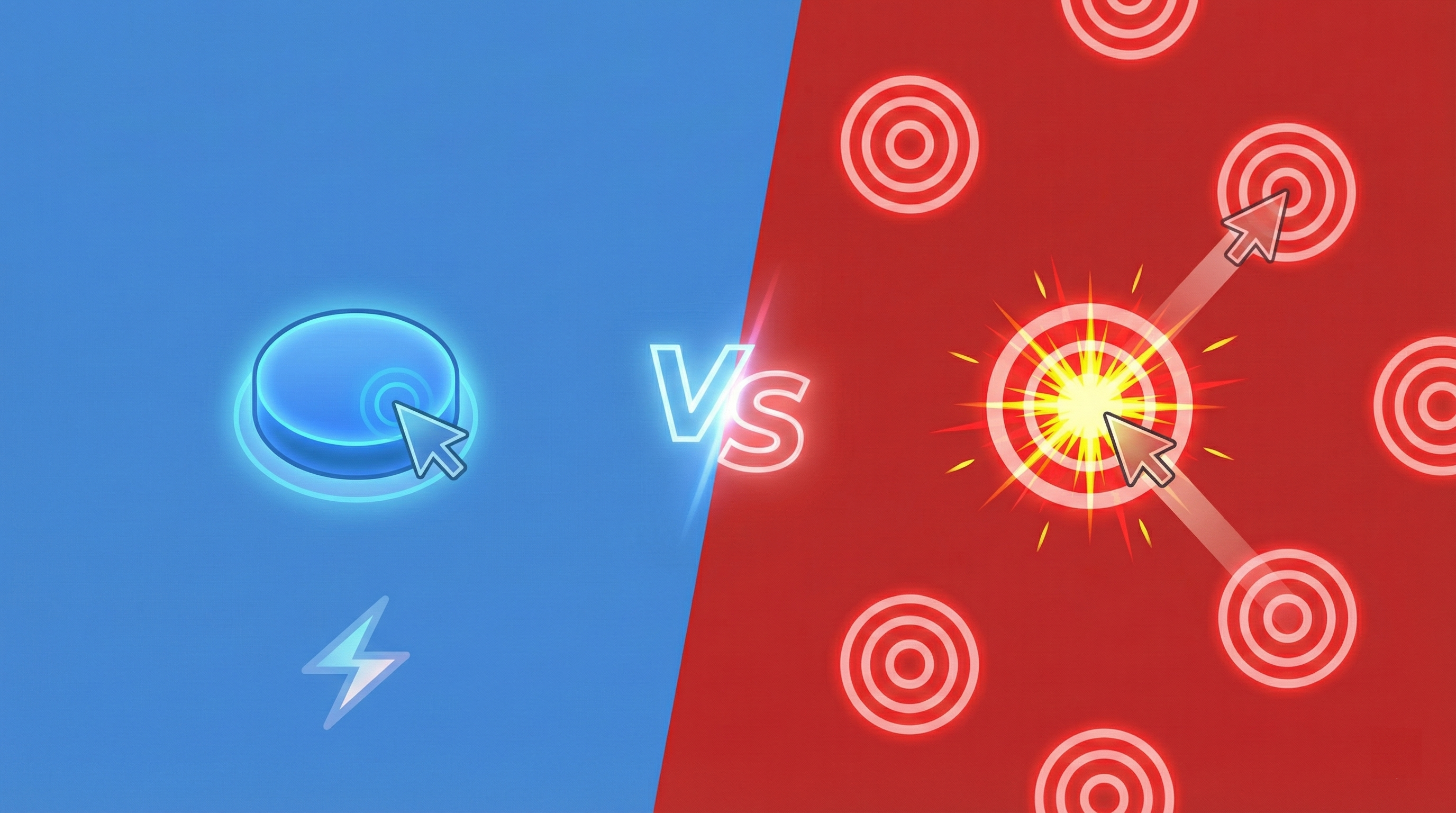
Pure speed and accuracy training builds fundamental motor skills, but games rarely give you isolated targets to click at your leisure. Real scenarios involve multiple targets simultaneously, time pressure, and the need to distinguish correct targets from distractors. That's what filtering trains: the cognitive skill of selecting the right target quickly while ignoring everything else.
What Filtering Actually Means
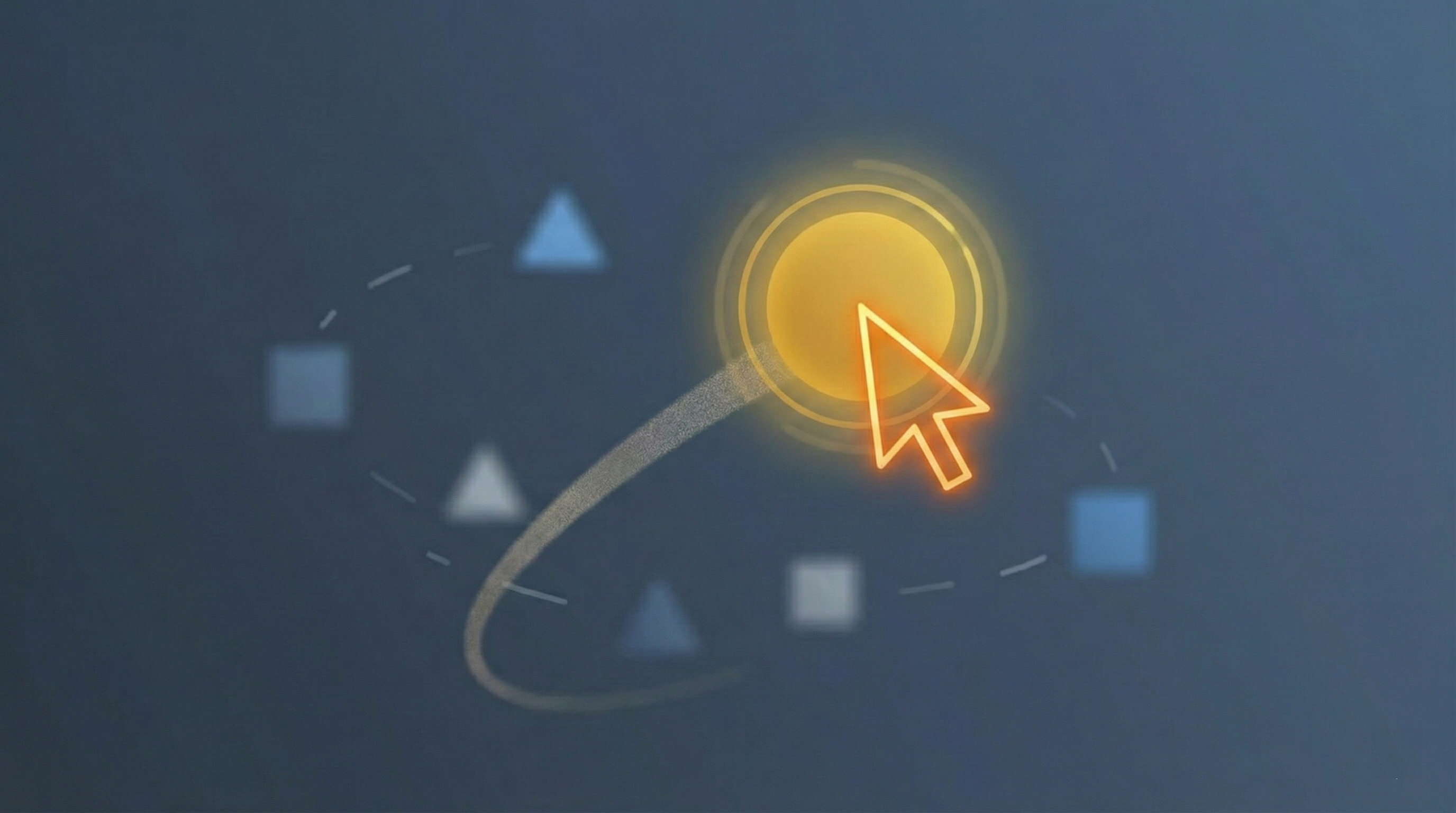
Filtering in the context of aim training refers to your ability to identify and click specific targets based on certain characteristics while ignoring targets that don't match those characteristics. The Multi-Target Aim Trainer implements this through color filtering (click only red circles), shape filtering (click only squares), or size filtering (click only large targets). This taps into what cognitive researchers call selective attention—perceptual load theory suggests that our attentional resources are finite and fully allocated, so when a task demands high perceptual load (like distinguishing targets from similar distractors), fewer resources remain for processing other stimuli.
This mimics real gaming scenarios more closely than simple aim tests. In a MOBA teamfight, you need to click the enemy carry while ignoring their tank who's standing right in front of you. In a battle royale, you need to focus fire on the opponent you've already damaged rather than switching to a fresh target just because they're closer. In tactical shooters, you need to prioritize the enemy planting the bomb over the one peeking from cover.
The filtering mechanic forces you to make a decision before each click: does this target match my criteria? Pure speed tests skip this cognitive layer entirely—every target is correct, so you're just practicing the motor execution of clicking, not the decision-making that precedes it.
Why Games Demand Selective Attention
Most competitive games punish indiscriminate clicking. Shooting the wrong target doesn't just waste time—it often actively harms your position by revealing your location, wasting ammunition, or allowing priority targets to act freely.
In MOBAs like League of Legends or Dota 2, clicking the tankiest enemy instead of the damage dealer means your team's burst damage gets absorbed by someone who can survive it. The high-value target remains alive and continues outputting damage. Players who can quickly filter through the visual chaos of a teamfight to click the correct champion tend to perform better in these critical moments.
In first-person shooters, target priority shifts constantly based on positioning, health status, and tactical situation. A player with excellent pure aim but poor target selection will lose to someone with slightly worse aim who consistently engages the right opponents first. The decision of who to shoot matters as much as landing the shot.
Battle royale games add another layer: third-party awareness. You need to track multiple threats simultaneously and decide which one demands immediate attention versus which can be ignored temporarily. Pure clicking speed doesn't help if you're shooting at the wrong person while someone else shoots you.
The Cognitive Load of Target Selection
Filtering training is cognitively demanding in a way that pure aim training isn't. When every visible target is potentially correct, your brain must evaluate each one against your criteria before clicking. This evaluation happens quickly—often in fractions of a second—but it still requires mental resources.
Under time pressure, this cognitive load increases. The Multi-Target Trainer's timer forces you to make faster decisions, which is where most players' accuracy degrades. You might have strong accuracy when taking your time, but filtering accuracy under pressure reveals whether you've actually developed the skill or whether you're just slow and careful. Increased cognitive demands from memory load can slow response times without changing the underlying visual processing efficiency - your brain is working harder on the decision-making even when your eyes are tracking just fine.
Adding distractors amplifies this further. When incorrect targets are present alongside correct ones, your visual system must continuously evaluate and reject options rather than just scanning for any valid target. This closely mirrors game environments where irrelevant visual information constantly competes for attention.
Movement makes filtering even harder. Static targets are easier to evaluate, but moving targets require tracking while simultaneously assessing whether they match your criteria. This combination of motion tracking plus selective attention represents the actual demand most games place on players.
Training Filtering Systematically
Start with simple filtering criteria and generous time limits. Color-based filtering (click only red targets) is typically easiest because color is processed quickly by the visual system. Basic features like color and orientation are processed in parallel across the visual field before attention is directed to specific objects, which is why color-based filtering feels more immediate than shape or size filtering. Practice this until your accuracy is consistently high—aim for around 85-90% accuracy before increasing difficulty.
Progress to shape-based filtering once color filtering feels comfortable. Shape requires slightly more processing than color, which increases cognitive demand. Then try size filtering, which can be more challenging because size differences are often subtler than color or shape differences.
Add time pressure gradually. Start with time limits that feel achievable, then reduce the available time incrementally as your speed improves. The goal is to maintain high accuracy while working faster—if accuracy drops significantly as you speed up, you're pushing too hard and should ease back.
Introduce distractors after you're comfortable with basic filtering. Having incorrect targets present forces you to actively reject options rather than just identifying correct ones. This is closer to real game scenarios where many possible targets exist but only some are optimal.
Practice movement filtering once static filtering is solid. Moving targets combined with filtering requirements represents high-level difficulty that transfers well to actual games. If you can maintain filtering accuracy on moving targets under time pressure, you've developed a genuinely useful skill.
Reverse Mode: Training Target Avoidance
The Multi-Target Trainer's reverse mode (avoid specific targets instead of clicking them) trains a complementary skill: inhibition under pressure. This represents scenarios where clicking the wrong thing is actively harmful—like accidentally clicking on your own teammate in a chaotic fight or shooting a decoy in a tactical shooter.
Reverse mode is often more difficult than standard filtering because inhibition requires actively suppressing an action your motor system is prepared to execute. When you see a target, your default response after aim training is to click it. Reverse mode forces you to override that automatic response for specific targets.
This skill transfers to situations where restraint matters. In tactical shooters, holding fire when a teammate crosses your line of sight. In MOBAs, not clicking on an enemy when they're positioned to bait your abilities. The ability to inhibit clicking under pressure is just as valuable as the ability to click quickly.
Common Mistakes in Multi-Target Training
Prioritizing speed over accuracy defeats the purpose. If you're clicking fast but hitting many wrong targets, you're not developing filtering skill—you're just clicking randomly and hoping. The whole point is to maintain accuracy while working under time pressure, not to maximize clicks regardless of correctness.
Staying with easy settings too long prevents progression. If you can consistently achieve very high accuracy with simple filtering and generous time limits, you're no longer training at a difficulty that challenges your current ability. The productive zone is where you're challenged but successful—understanding how to balance speed and accuracy helps find that zone.
Neglecting pure aim training entirely in favor of filtering creates a different problem. Filtering skill doesn't help if your basic motor control is poor. You need both: solid fundamental aim plus the ability to apply it selectively. The two types of training complement each other rather than replacing each other.
Training only one type of filtering limits your adaptability. Games demand different filtering criteria in different situations—color-based target identification in one game, size-based priority in another, position-based selection in a third. Practice multiple filtering types to develop flexible selective attention.
Measuring Your Filtering Progress
Track filtering accuracy separately from overall clicking accuracy. Your pure aim accuracy might be high, but if filtering accuracy is significantly lower, that identifies your specific weakness. The gap between "accuracy on all targets" and "accuracy when selecting specific targets" reveals how much the cognitive demand affects your performance.
Monitor how accuracy changes with time pressure. If you maintain high filtering accuracy with unlimited time but accuracy crashes when time limits are added, your filtering isn't yet automatic—you're using slow, deliberate processing that breaks down under speed demands.
Pay attention to error types. Are you missing targets (motor control issue) or clicking wrong targets (filtering failure)? These require different training approaches. Missing targets means you need more pure aim work; clicking wrong targets means you need more filtering practice or slower, more deliberate filtering until it becomes automatic.
Compare training performance to game performance. If your filtering accuracy in training is much higher than your target selection success rate in games, something isn't transferring. This often means training conditions don't match game demands closely enough—you might need more movement, more visual complexity, or different filtering criteria that better match your actual game.
Transfer to Specific Game Types
For MOBAs, practice filtering with multiple similar-looking targets where subtle differences matter. Color-coded filtering (click only red/blue team) and size filtering (click larger = higher priority champions) most closely match teamfight target selection demands.
For tactical shooters, practice with movement and position-based filtering. The ability to quickly identify heads in a crowd of bodies, or to distinguish slight positional differences that indicate friend versus foe, transfers directly to actual gameplay.
For battle royales, practice rapid attention switching between multiple targets. The game constantly requires reassessing priority as third parties appear, as damage accumulates, or as positioning changes. Training that forces you to switch filtering criteria mid-session simulates this demand.
For fast-paced arena shooters, practice filtering under extreme time pressure with movement. These games demand rapid target selection at high speed with little time for deliberate evaluation. Your filtering needs to be nearly automatic to keep up with game pace.
Filtering as a Foundation for Advanced Play
Elite players often describe target selection as "automatic" or "instinctive." They're not consciously thinking through which target to click—the correct target just seems obvious. This automaticity develops through extensive practice specifically on selective attention under pressure, not through pure aim repetition.
The path to automatic filtering starts with slow, accurate selection and gradually increases speed until the decision-making becomes subconscious. This is why systematic progression matters—you can't skip the deliberate practice phase and jump straight to automatic performance.
Once filtering becomes automatic, your conscious attention frees up for higher-level decision-making. Instead of thinking "which target should I click," you can think about positioning, resource management, or team coordination while your filtering happens automatically in the background. This is the actual goal: filtering so reliable it doesn't consume conscious resources.
The Bottom Line
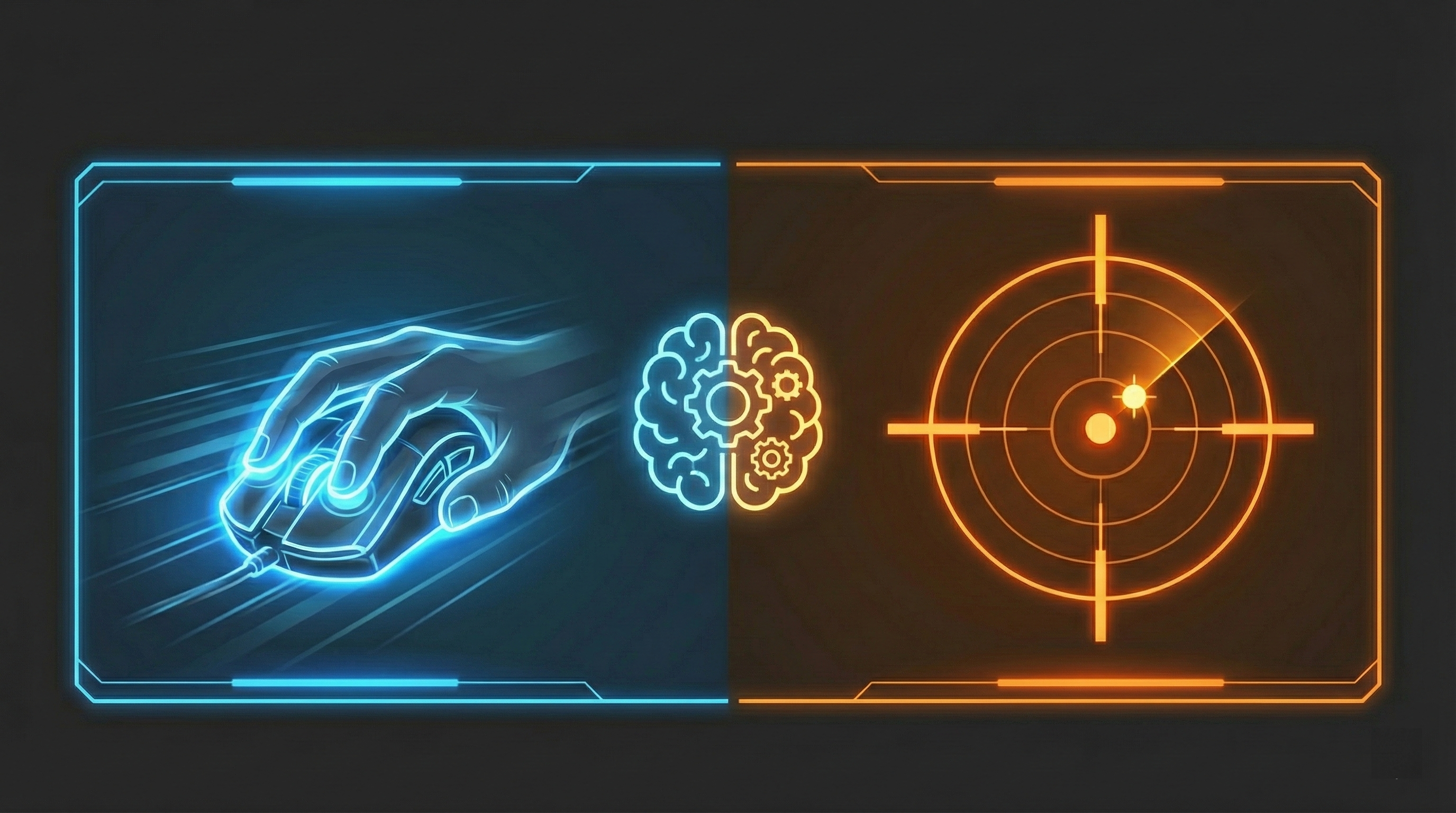
Pure speed and accuracy training builds necessary fundamentals, but games rarely present isolated targets without context or competition for attention. The ability to quickly identify and engage correct targets while ignoring distractors often matters more than raw clicking speed.
Filtering training develops selective attention under pressure—the cognitive skill of target selection, not just the motor skill of cursor placement. This selective attention is what actually transfers to competitive gaming scenarios where multiple potential targets exist but only some are optimal.
Train filtering systematically: start with easy criteria and generous time, gradually increase difficulty through tighter time limits and added distractors, and practice multiple filtering types to develop flexible attention. The goal is filtering accuracy that remains high even under time pressure with movement and visual complexity.
Understanding what aim training actually improves helps clarify why filtering matters: games test your ability to apply aim selectively and appropriately, not just your maximum possible clicking speed on any available target. Filtering training bridges the gap between pure motor skills and actual game performance.