Soccer Goalkeeper Reaction Time: The Hidden Skill Behind Big Saves
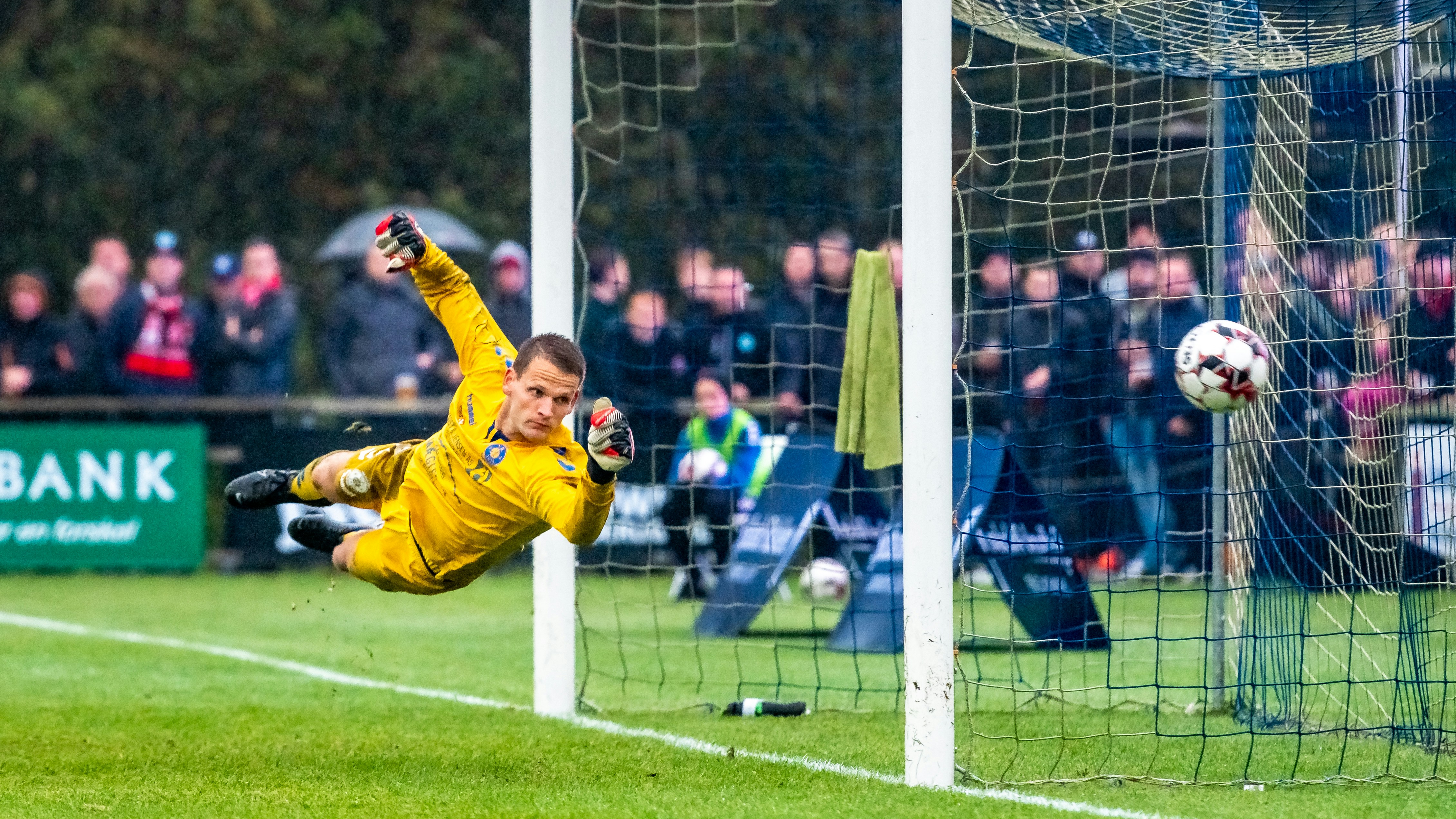
Imagine this. A striker unleashes a shot from 18 yards. How long do you think a soccer goalkeeper has to react effectively? Roughly 0.5 to 0.7 seconds, depending on shot speed. Pretty quick.
Now, if that same shot deflects off a defender's leg just six yards out, that window shrinks even shorter—to somewhere around 0.2 to 0.3 seconds. There's barely enough time to blink. In those fractions of a second, the difference between a spectacular save and a goal isn't just technique or positioning. There's another big factor, and it's reaction time.
What Goalkeeper Reaction Time Actually Means
Reaction time for goalkeepers isn't just about moving fast. It's the complete chain of events from the moment you see a stimulus (the striker's shot) to the moment your body responds (diving to your left).
Here's what happens in those milliseconds: Your eyes detect the ball leaving the striker's foot. That visual information travels to your brain's visual cortex. Your brain processes the ball's speed, trajectory, and spin while simultaneously analyzing the striker's body position and the positions of defenders who might deflect it. Based on all this information, your brain makes a decision about where to move. Finally, it sends motor commands to your muscles to execute the save.
Research shows that experienced goalkeepers have reaction times of 250-260 milliseconds, significantly faster than novice goalkeepers at 300-320 milliseconds. That 50-60 millisecond difference might not sound like much, but at the professional level, it's often the difference between a save and a goal.
What Makes Goalkeeper Reaction Time Different
Not all reaction time is the same. A sprinter reacting to a starting gun uses simple reaction time—one stimulus, one response. A goalkeeper's reaction time is far more complex.
Goalkeepers use what's called choice reaction time. You're not just reacting to the ball; you're analyzing multiple pieces of information simultaneously (ball speed, trajectory, spin, striker's body angle, potential deflections from defenders) and choosing the appropriate response from many options (dive left, dive right, stay central, come forward, stay back).
This complexity is why goalkeeper-specific training matters. The best goalkeepers aren't just fast—they're fast at processing the specific visual information relevant to shot-stopping. They've trained their brains to instantly extract the critical cues (where is the striker's plant foot, what's the angle of their hips, how are they striking through the ball) while filtering out irrelevant information.
Traditional Goalkeeper Training: Effective But Incomplete
Walk into any goalkeeper training session and you'll see diving drills, positioning work, shot-stopping practice, and footwork exercises. These are all essential and highly effective. When you face shot after shot in training, you're doing several valuable things:
You're learning to read strikers' body language and predict shot direction. You're developing muscle memory for proper diving technique and hand positioning. You're building the physical conditioning needed to make multiple saves in quick succession. You're training your decision-making for when to stay on your line versus when to come out.
This soccer-specific training is irreplaceable. There's no substitute for actually facing shots, dealing with crosses, and handling the chaos of bodies in the box. The experience you gain from thousands of repetitions in goalkeeper-specific scenarios is what separates good goalkeepers from average ones.
And yes, your reaction time does improve through this training. The more shots you face, the faster you get at processing the visual cues specific to shot-stopping. After years of training, experienced goalkeepers react 50-60 milliseconds faster than beginners—and much of that improvement comes from this traditional, soccer-specific work.
So traditional goalkeeper training works. It's proven, it's essential, and every goalkeeper should be doing it.
But there's something missing.
The Hidden Training Tool: Fundamental Reaction Speed
Here's what most goalkeepers and coaches don't realize: underneath all the soccer-specific skills, there's a fundamental cognitive ability that can be trained separately. It's your baseline reaction speed—the pure speed at which your brain processes any visual stimulus and commands your body to move.
Think of it this way. If you want to improve your endurance, you go running. If you want to build power, you do weight training. These aren't soccer drills, but they make you better at soccer by improving the fundamental physical capacities that underlie all soccer movements.
For reaction time, the same principle applies. You can train your fundamental visual-motor processing speed separately from soccer, then apply that improved baseline to all your goalkeeper-specific situations.
This is the hidden training tool that most goalkeepers never use. They improve their reaction time slowly over years through soccer-specific repetition, never realizing they could supplement that work with targeted baseline training.
How Baseline Reaction Training Works
Your baseline reaction speed is trainable through simple visual-motor exercises. These aren't soccer drills—they're cognitive training exercises where you respond as quickly as possible to visual cues.
For example: A screen changes from blue to red, and you click as fast as possible. Or lights appear in different positions, and you tap them the instant you see them. Or numbers flash on a screen, and you press the corresponding key immediately.
These exercises seem too simple to be effective. But remember what you're training: the fundamental speed at which your visual system detects a stimulus, your brain processes it, and your nervous system sends the motor command to respond. This is the foundation underlying every save you'll ever make.
Research shows that consistent reaction time training can improve baseline reaction speed with regular practice. That improvement can then contribute to better performance in goalkeeper situations—reacting to deflections, through balls, and unexpected plays on the field.
It's like running to improve endurance. Running itself isn't soccer, but the cardiovascular fitness you build can help your overall performance. Similarly, baseline reaction training isn't soccer, but the neural processing speed you develop can contribute to faster responses in goalkeeper situations.
The Training Approach: Combining Baseline and Soccer-Specific Work
The most effective approach combines baseline reaction training you can do anywhere with your soccer-specific goalkeeper work.
Part 1: Baseline Reaction Training (Off-Field)
This is training you can do at home with just your phone or computer. No equipment, no field, no coach needed.
Part 1-A: Simple Visual Reaction Speed
Start with the foundation: pure visual reaction time. Test and train your simple reaction speed with exercises where you respond to a single stimulus as fast as possible—like clicking when a screen changes color. This builds your baseline processing speed.
Think of this as your "running" for reaction speed. It's not glamorous, it's not soccer-specific, but it builds the foundation everything else relies on.
Part 1-B: Complex Baseline Training
Once you've worked on simple reactions, add complexity that's still trainable off-field:
Choice reaction training: Practice making quick decisions between multiple options. This trains the decision-making component of reaction time—do you go left or right, dive or stay standing? This cognitive skill transfers directly to goalkeeper situations where you're constantly choosing between multiple responses.
Aim training: If you want more game-like practice, aim training apps let you click on targets that appear randomly on screen. It's similar to tracking a ball and reacting to its position—visual tracking combined with precise motor response. Many professional athletes use these for hand-eye coordination training.
The beauty of baseline training is you can do it whenever you have a few minutes—waiting for practice to start, before bed, during study breaks. No pressure, no schedule, just consistent practice when it fits your life.
Part 2: Soccer-Specific Application (On-Field)
This is your traditional goalkeeper training, but done with an emphasis on unpredictability and rapid response. The key is genuine unpredictability—you cannot predict what's coming.
Close-range rapid-fire drills: Multiple servers take shots in quick succession from 8-12 yards, testing your ability to react and recover repeatedly without time to prepare.
Deflection training: Place mannequins or cones in front of the goal to simulate defenders, then have shots taken that deflect unpredictably off these obstacles. This trains your ability to adjust mid-dive when the ball's path changes.
Vision-obscured reaction drills: Face away from the shooter, then turn and react to a shot on command. Or have a coach hold a ball in front of your face, then drop it to reveal a shot you must save. These eliminate anticipation and force pure reaction.
Multi-stimulus drills: React to color-coded cues (green ball = dive, red ball = catch) or numbered targets (server calls a number, you dive to the corresponding cone). This trains the decision-making component in a soccer context.
The soccer-specific training takes your improved baseline speed and applies it to goalkeeper situations. You're not choosing between baseline training and soccer training—you're doing both, and they reinforce each other.
Common Mistakes in Goalkeeper Reaction Training
Many goalkeepers unknowingly sabotage their reaction training by making these errors:
Mistake 1: Predictable shot patterns. If your coach takes ten shots in a row to your left side, you're not training reactions—you're training muscle memory for diving left. Real games aren't predictable. Your training shouldn't be either.
Mistake 2: Too much recovery time. Taking one shot, then resting 30 seconds, then another shot doesn't replicate game conditions. Real matches demand consecutive saves with minimal recovery. Your training should too.
Mistake 3: Only training at comfortable distances. Most goalkeeper training happens from 16-20 yards out, giving you plenty of time to react. But the hardest saves—the ones that define great goalkeepers—come from 6-10 yards after deflections or quick plays. Train at these distances too.
Mistake 4: Neglecting baseline speed work. This is the biggest mistake. Focusing only on shot-stopping without improving your fundamental reaction speed is like trying to improve your vertical jump without ever strengthening your legs. You need both.
The Role of Anticipation vs. Reaction
Improving reaction time doesn't mean abandoning anticipation. The best goalkeepers use both.
Anticipation is reading the game—noticing that the striker tends to shoot near post, or that this midfielder always looks for the far corner, or that when the ball is played into this space, a deflection is likely. This knowledge allows you to position yourself optimally and prepare for likely scenarios.
Reaction time is what saves you when your anticipation is wrong or when something completely unpredictable happens. It's your insurance policy against the unexpected.
The relationship between anticipation and reaction is complementary. Better reaction time gives you more confidence to trust your positioning rather than guessing. If you know you can react quickly to any shot, you're less likely to dive early based on a hunch. You can wait that extra split-second to confirm the ball's actual path, then react with certainty.
Conversely, good anticipation buys you precious milliseconds. If you've correctly read that the striker is going far post, you can begin shifting your weight and positioning yourself even before the shot is taken. Your reaction time is then applied from a better starting position, making saves that would otherwise be impossible.
Age and Reaction Time: What Goalkeepers Should Know
There's a persistent myth that reaction time is fixed by genetics and declines inevitably with age. While it's true that reaction time tends to peak in the mid-20s and gradually slows with age, the decline can be significantly reduced through consistent training.
Research shows that physically active older athletes often maintain reaction times comparable to untrained younger athletes. The key word is "active." If you stop challenging your reaction speed, it will decline more noticeably. If you continue training it, you can maintain strong performance well into your 30s and beyond.
For younger goalkeepers, this means you have a window of peak neuroplasticity to develop elite reaction speed. For older goalkeepers, it means you can absolutely improve—or at minimum, prevent the decline that affects untrained individuals.
The Bottom Line
Every spectacular save you've ever seen began with reaction time. The goalkeeper who somehow gets a hand to the ball deflected from three yards out didn't just guess right—they processed information and moved their body faster than seems humanly possible.
That speed isn't magic, and it isn't purely genetic. It's trainable.
Most goalkeepers will spend their entire careers improving reaction time slowly through soccer-specific training alone, never realizing they could train the fundamental skill directly. They're like runners who only practice soccer and wonder why their endurance isn't improving as fast as it could.
You don't have to be most goalkeepers. Test your baseline reaction speed, incorporate baseline training when you can, and continue your soccer-specific work. The combination is what creates elite shot-stoppers.
The difference between a good goalkeeper and a great one often comes down to milliseconds. Start training them.