Caffeine and Reaction Time: The Short-Term Gain, Long-Term Problem
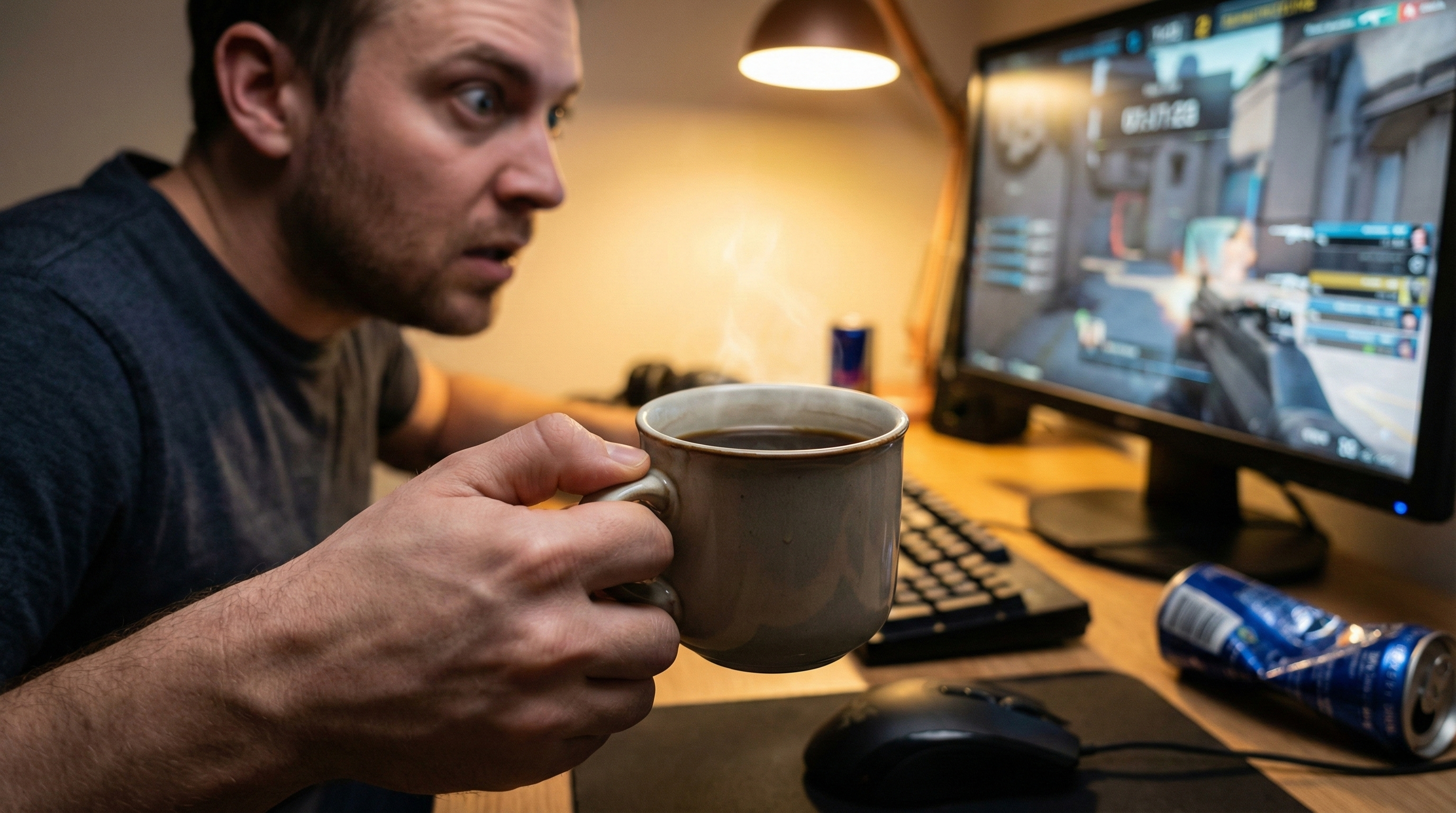
If you're an athlete timing your sprint start down to 0.10 seconds, a gamer trying to land that clutch headshot, or a professional wanting to stay sharp in your workplace, your go-to item might be that cup of coffee (and it is your 2nd, or 3rd cup of the day!). The science actually backs it up as effective—caffeine really does improve reaction time according to many studies. But here's what you may not know: the effect disappears faster than you think.
How Much Caffeine Actually Helps
As you probably know it already, caffeine really works (otherwise, why would you even reach for that, right?). Studies show that 3 mg/kg body weight—about 200mg for a 150-pound person, or roughly two cups of coffee—can improve reaction time by 5-12%. In a study of taekwondo athletes, caffeine shaved 50ms off reaction times, from 420 milliseconds down to 370 milliseconds. That's the difference between landing a kick and getting countered. Yes, it is significant!
The effects are even more pronounced for esports players. For example, professional gamers who were given 3 mg/kg of caffeine showed quicker simple reaction times (200ms vs 190ms) and shaved 40 milliseconds off their time to hit targets. Even if you aren't a pro gamer, you can see that a 40ms advantage is massive. In a shooter game, that is literally the difference between shooting first or dying first.
Also, caffeine doesn't just speed up your motor response. It sharpens your attention and visual processing too. Brain imaging research showed that caffeine's effect on reaction time works primarily through attention rather than motor processes. You're not moving faster—you're recognizing what to respond to more quickly. In other words, you are more alert.
Why Your Daily Cup Stops Working
Doesn't it sound great? It does, doesn't it? But unfortunately, there is a catch. After only a few weeks of daily use, it stops boosting your performance anymore. It's just bringing you back to baseline.
The mechanism is pretty straightforward. I use a bit of science words but stick with me. Caffeine works by blocking adenosine receptors in your brain. Adenosine is the chemical that makes you drowsy. When caffeine blocks these receptors, you feel more alert. But your brain adapts. With daily caffeine intake, your brain produces more adenosine receptors to compensate. Eventually, the caffeine is still blocking the same number of receptors, but there are extra receptors triggering sleepiness anyway.
Studies tracking tolerance development show a clear timeline:
So let's take a look at concrete numbers, shall we? Here is what happens after you start drinking coffee.
Days 1-15: Caffeine produces significant performance benefits. Reaction time improvements, enhanced alertness, and better cognitive performance are all measurable. But these effects start declining noticeably after the first week.
Days 15-30: The benefits become moderate at best. By day 20 of daily consumption (at 3 mg per kg of your body weight), the performance improvements that were observed on day 1 are almost completely gone! One study found that while caffeine still produced peak power gains on day 1, by day 20 there was no significant difference between the caffeine and placebo groups.
After 30 days: For regular coffee consumers, the physical and cognitive benefits of caffeine largely disappear. You're no longer getting faster reaction times. You're just avoiding withdrawal symptoms.
Even more concerning: research on habitual caffeine users shows that high consumers (300mg+ per day) actually have slower reaction times than low consumers (0-50mg per day), regardless of whether they've had their daily dose or not. Now, note that one regular coffee has 95-135mg of caffeine.
The Hidden Costs of Daily Dependence
Beyond tolerance, chronic high-dose caffeine use creates other problems that affect reaction time. Let's take a look at them.
The Jitters: While caffeine improves attentional processes, high doses (400mg+) can impair fine motor control. Your brain is faster at recognizing threats, but your hands are shaking too much to respond accurately.
Sleep Disruption: Even caffeine consumed 6 hours before bed can reduce sleep quality. Poor sleep directly impairs reaction time. One night of poor sleep can slow your reactions by 100-200 milliseconds, completely negating any benefit from the next day's coffee.
The Crash: When caffeine wears off, all those extra adenosine receptors your brain created come roaring back. Your reaction time doesn't just return to baseline. It can actually dip below it for several hours.
Oops, the cost-benefit is not that great anymore, is it?
Strategic Caffeine Use: Keeping the Edge When It Matters
So you might have thought, "OK, then I should quit drinking coffee."
But not so fast. You don't have to. The solution isn't to quit caffeine entirely. It's to use it strategically so it actually works when you need it. How do you do it? Here is the list of things you can do.
Cycle Your Intake: To prevent tolerance, limit caffeine to 2-3 times per week maximum. Save it for competition days, important presentations, or situations where peak performance matters.
Time It Right: Caffeine peaks in your bloodstream 45-60 minutes after consumption. Take it an hour before your critical performance window, not right before.
Dose Correctly: The sweet spot is 3 mg/kg of body weight. For a 70kg (154 lb) person, that's 210mg—roughly two cups of coffee. More isn't better. Above 400mg, you risk the jitters outweighing the benefits.
Reset When Needed: If you've built up tolerance, a 10-14 day caffeine break will reset your sensitivity. You'll experience withdrawal headaches for the first 2-3 days, but by day 14, caffeine will work like it did the first time you tried it.
Train Your Baseline: The Caffeine-Free Alternative
Here's the uncomfortable truth: if you feel that you need caffeine just to function normally, your actual baseline reaction time might have degraded. That's not something you want, especially if you're working in a field where your reaction time really matters.
But instead of relying on a substance to artificially boost performance, you can actually train your natural reaction speed to be faster than most people, even with caffeine.
Regular reaction time training produces consistent improvements without the tolerance problem. Some studies show that targeted practice can improve reaction time by 10-20% over 4-6 weeks—improvements that persist without daily dosing.
Don't you think it is much better than relying on coffee? You actually can get faster without any artificial help! (And if you so want to, you can boost it with caffeine when it is actually needed.)
Try these evidence-based reaction training tools:
There are some free tools you can use and I made them free to use on this website (yes, free means free, without a catch, no login or downloading required). These tools are as below.
Reaction Time Test - Establish your baseline and track improvements over time. Test yourself in both caffeinated and non-caffeinated states to see your true performance.
Stroop Test - Train the same attentional processes that caffeine enhances. This test improves your ability to process conflicting information quickly—a key component of reaction speed.
Go/No-Go Test - Develop impulse control and selective response speed. This trains your brain to react to the right stimuli while inhibiting responses to the wrong ones.
Flanker Task - Enhance selective attention and reduce interference from distractions. This builds the attentional filtering that caffeine temporarily provides.
The Bottom Line
Caffeine genuinely improves reaction time—by 5-12% with moderate doses. But this benefit is fleeting. Daily use builds tolerance within 15-20 days, leaving you dependent on caffeine just to reach your normal baseline. Heavy chronic use may actually slow your natural reaction time below what it would be without any caffeine at all.
Use caffeine strategically—2-3 times per week, timed for peak effect, at the right dose. For everything else, train your baseline reaction speed so you don't need a substance to perform at your best. Your natural, well-trained reflexes will beat someone else's caffeine-dependent performance every time.