Driving at Night: Why Fatal Accidents Happen More Often
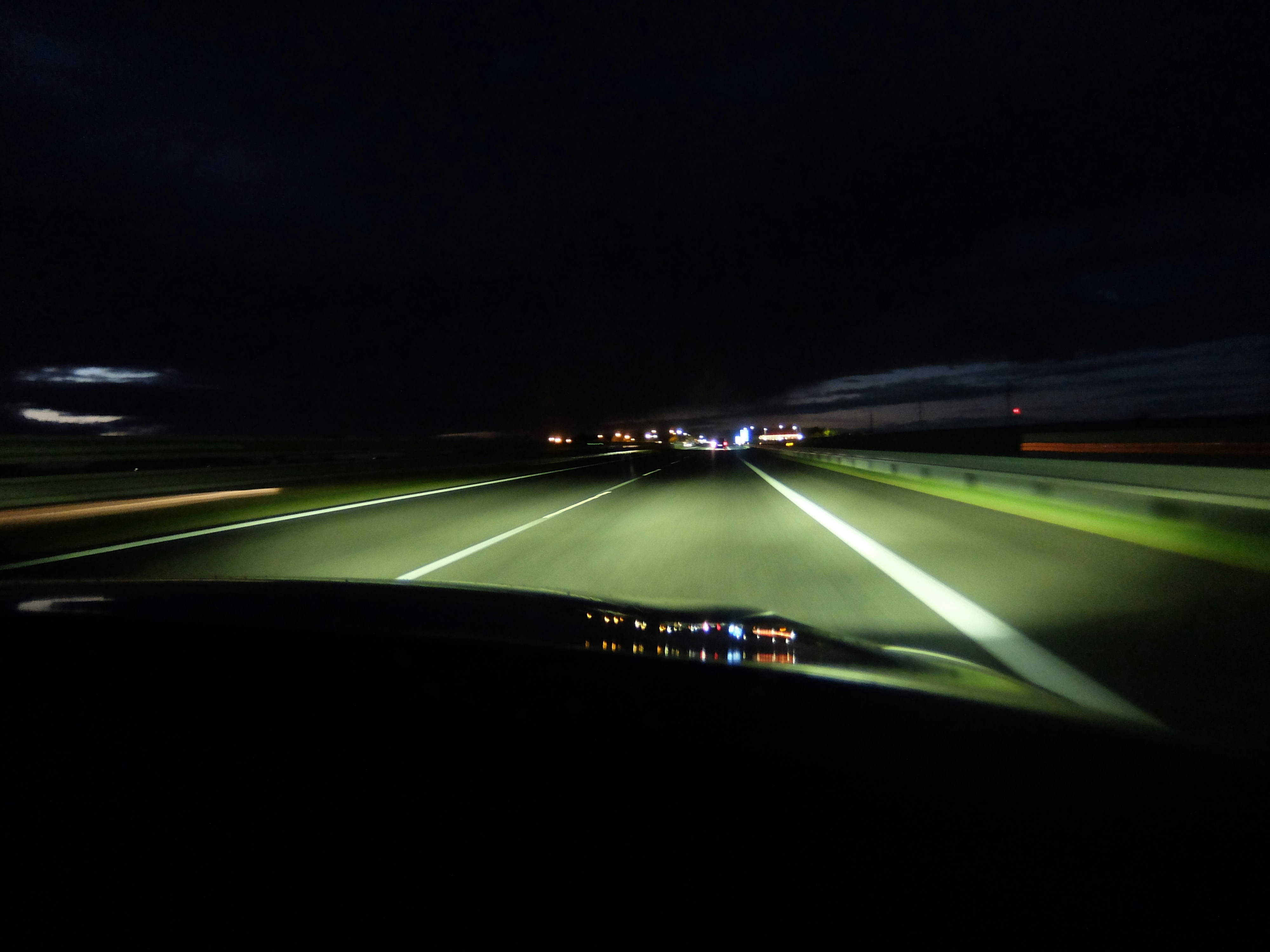
You know that feeling. You're driving at night, and suddenly a car cuts in front of you, or someone brakes unexpectedly, and you barely stop in time. Your heart races. You think, "That was close."
Accidents do happen more often at night. Research shows the night accident rate is nearly twice as high on rural roads compared to daytime. I wrote about an accident I had when I was younger in this article about defensive driving, and it did happen at night.
There's scarier data too. Fatal crashes are more common at night as well—the nighttime fatality rate per mile driven is about three times higher than during the day.
Most people assume night driving is dangerous because you can't see as well. That's true—darkness absolutely reduces visibility. But here's what most drivers don't realize: the bigger problem isn't just that you can't see hazards as clearly. It's that when you do see them, your brain processes that information more slowly and your body responds later.
Your reaction time gets worse at night. Sometimes dramatically worse. And this invisible slowdown is why fatal accidents happen so much more often after dark.
The Numbers Tell a Disturbing Story
Despite making up only 25% of total driving time, nighttime accounts for over 50% of traffic deaths. The risk of a fatal crash is three times higher at night compared to daytime driving.
These statistics aren't just about drunk drivers or poor visibility. They're about something more fundamental: when driving at night, your entire cognitive system operates more slowly.
Research measuring nighttime drivers' reaction times shows that tired drivers have reaction times of 0.223 seconds compared to 0.189 seconds for rested drivers, and very tired drivers reach 0.309 seconds. Very tired drivers are about 0.12 seconds slower than rested drivers. At 60 mph, your car travels an additional 10 feet before you even start braking.
Why Darkness Slows Your Reactions
When you drive at night, several things happen to your visual system that directly impact how quickly you can respond to hazards.
Your eyes switch to rod-dominant vision. In low light, your eyes rely primarily on rod cells rather than cone cells. Rods are more sensitive to light, but they process information more slowly and provide less detail. This means the visual signal your brain receives is both delayed and less precise.
Contrast and luminance drop. At night, the difference between objects and their backgrounds decreases. Your brain needs more time to separate a pedestrian's dark clothing from the dark road, or a car with dim taillights from the surrounding darkness. Studies show that decreased contrast and luminance directly increase visual processing time.
Your circadian rhythm works against you. Your body is biologically programmed to be less alert after dark. Between midnight and 6 a.m., your natural drowsiness isn't just about feeling tired—it's about your brain genuinely processing information more slowly. This isn't something you can simply "push through" with willpower.
The result? The entire reaction chain—see the hazard, process what it is, decide how to respond, execute the response—takes longer. In some cases, it can take about 50% longer than during the day.
The Invisible Danger: Driving Beyond Your Reaction Window
Here's the problem most drivers never consider: at night, even with high beams on, your headlights illuminate about 500 feet ahead (250 feet for low beams). But if you're driving at 60 mph and your reaction time is even slightly slower than normal, you need more than 500 feet to spot a hazard, react, and come to a stop.
Research shows that drivers regularly "overdrive their headlights" at night—traveling at speeds where their stopping distance exceeds their visual range. During the day, with full visibility, this doesn't matter. At night, it's the difference between a close call and a crash.
Yet most people drive the same speeds at night as during the day. They don't adjust because they don't realize their reactions are slower.
Fatigue: The Reaction Time Killer
Even if you're not consciously tired, nighttime driving affects your alertness. The longer you've been awake, the slower your reactions become—and this effect is magnified at night. While caffeine can provide a temporary boost to reaction time, it's not a substitute for adequate rest.
The National Safety Council found that driving after 20 hours without sleep produces reaction times equivalent to a blood alcohol content of 0.08%—the legal limit for impairment. You don't need to be falling asleep at the wheel for fatigue to slow your reactions. Even mild tiredness extends your reaction time enough to turn what would be a routine daytime stop into a split second too late.
And unlike alcohol impairment, fatigue doesn't come with obvious warning signs. You might feel fine right up until you realize you're reacting too slowly to avoid danger.
Glare Makes Everything Worse
Oncoming headlights create another reaction time problem that doesn't exist during the day. When bright lights hit your eyes, you experience temporary disability glare—a few seconds when your vision is compromised and your ability to detect hazards drops dramatically.
Studies show that glare increases reaction times, extends recovery time after the light passes, and can cause drivers to drift in their lane. During those critical seconds when you're recovering from glare, your effective reaction time isn't just slower—it's nearly nonexistent.
For older drivers, this effect is even more pronounced. Reaction time itself slows with age, and recovery time from glare increases as well. Visual sharpness in low light conditions also declines after age 40. What might be a minor annoyance for a 25-year-old becomes a significant reaction time liability for a 50-year-old.
What You Can Actually Do About It
Understanding that night driving slows your reactions doesn't mean you need to avoid it entirely. It means you need to adjust your driving to compensate. Training your baseline reaction time during the day and using smart nighttime driving habits can help keep you safe.
Increase your following distance. The standard three-second rule for daytime becomes even more critical at night. Give yourself four or even five seconds behind the car ahead. This extra space compensates for your slower reaction time and gives you room to respond without panic braking.
Reduce your speed. Not dramatically, but enough that your stopping distance stays within your visual range. If you can only see 250 feet ahead with low beams, driving 60 mph means you're gambling that nothing will appear in those 250 feet that requires an immediate stop.
Use high beams properly. High beams dramatically improve your visual range—but only if you use them. Many drivers forget to switch to high beams on empty roads, cutting their effective reaction window in half. Switch back to low beams when you see oncoming traffic, but use high beams whenever possible.
Take breaks on long drives. Every two hours, stop and rest for at least 10-15 minutes. Fatigue accumulates gradually, and by the time you feel tired, your reaction time has already slowed significantly.
Test your baseline reaction time. Knowing your normal reaction time helps you recognize when you're impaired. If you notice your reactions feeling slower than usual, that's your cue to either take a break or consider whether you should be driving at all.
Be especially cautious during high-risk hours. Between midnight and 6 a.m., and during the first hour after dusk, accident rates spike. These are the times when your biological alertness is lowest and other impaired drivers are most common.
The Bottom Line
Fatal accidents at night aren't just bad luck. They're the predictable result of slower reaction times combined with situations that demand quick responses.
Most drivers never think about their reaction speed. They focus on their ability to see hazards, assuming that if they can spot danger, they can respond to it in time. But at night, that assumption breaks down. You can see the brake lights ahead and still hit the car because your brain processed that information too slowly.
The good news? Once you understand that night driving fundamentally changes your reaction capability, you can compensate. Increase your following distance. Reduce your speed slightly. Use your high beams. Take breaks when you're tired. These simple adjustments give you back the reaction time margin that darkness takes away.
Your reaction time might slow down at night, but your awareness doesn't have to. Drive like your reactions are slower—because they are.