Struggling With Piano Sight-Reading? Train Reaction Time
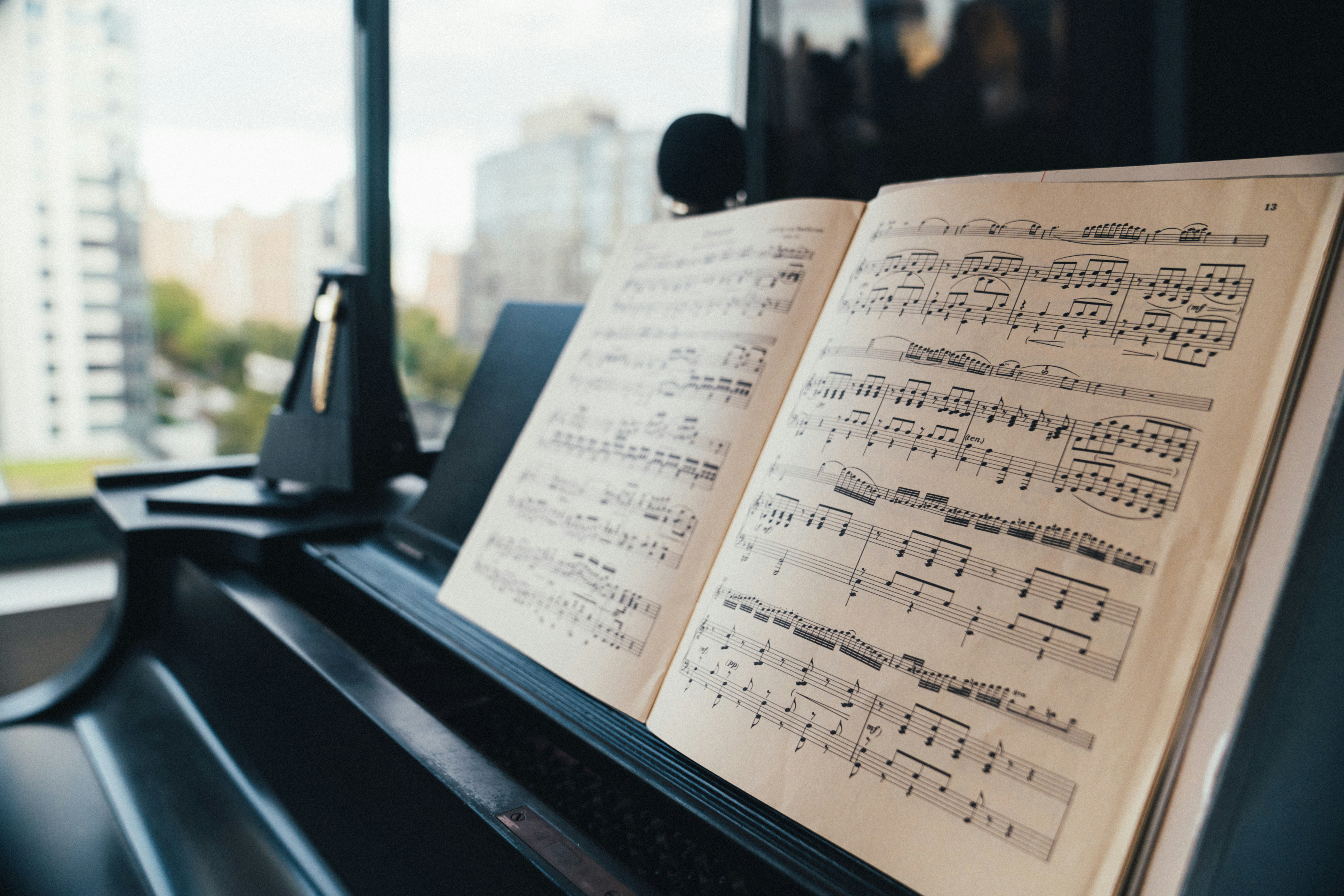
If you are like me, you love piano and practice a lot to get better. How you practice depends largely on what type of music you play. Jazz and pop pianists rely mainly on chord progressions and improvisation, or use their ear to learn pieces without depending much, or at all, on sheet music. Classical pianists, on the other hand, typically practice with sheet music, at least initially, even though many eventually memorize pieces to perform from memory. Even if you're a pop/jazz player, reading music is a valuable skill to have, and sometimes makes the difference between getting a gig or not—clients often want you to play specific pieces on the spot. If you can't sight-read smoothly, you lose the opportunity.
Some pianists are exceptional sight-readers who can play a piece from start to finish even when seeing the music for the first time. This is a remarkable skill, but it requires extensive practice. As they say, practice makes perfect.
Understanding Music First
To sight-read effectively, you first need to understand music notation. This is fundamental. If you've never learned to read music, it's a challenging skill in itself. What do these five lines mean? What does this symbol indicate? It might surprise classical pianists to learn that some excellent jazz/pop pianists can barely read notes and symbols at all. So that's where everyone starts. But once you've learned the basics, the rest comes down to practice.
If you were trained classically, you probably know how to read music already. But here's the thing: most people practice by playing a piece repeatedly, glancing back and forth between the sheet music and keyboard, or they try to memorize it as quickly as possible so they don't need to rely on the sheet music (I've been playing piano for over 20 years, and I still do this).
Memorizing pieces works well, and many pianists do it, but it won't improve your sight-reading ability. That's why it's often recommended to practice sight-reading separately. For this practice, you use easier pieces and learn to keep playing even when you make mistakes. The goal isn't perfection—it's to sound passable to most listeners' ears. Once you can handle easy pieces, you move up to the next level. With enough practice, you can play moderately difficult pieces straight through on the first try. You'll still make mistakes, but most people won't notice, and that's actually what good sight-reading looks like.
The Missing Component Most Pianists Don't Think About
Simple enough? But here's something most pianists overlook when practicing sight-reading: there's a missing piece in how we think about this skill. When you sight-read, here's what actually happens: You see the music, your brain perceives and interprets it—determining which keys your fingers should hit next. Then your brain sends the motor command to your fingers (and hands for support) to execute those movements. This process continues throughout the entire piece.
Think about what your brain is actually doing during sight-reading. Your eyes fixate on a note (or cluster of notes). Then your brain has to decode what that notation means—what pitch, what duration, what finger to use. Then it has to send the motor command to your hand. Then your fingers have to execute the movement. And all of this needs to happen while you're simultaneously reading ahead to the next notes. The whole process is basically a continuous loop of visual recognition → cognitive processing → motor execution.
This entire sequence is your brain's reaction to visual stimuli. And the speed varies considerably from person to person. Even if you understand what the music indicates, if you can't translate that information into finger movements fast enough, you'll fall behind the tempo and struggle to play smoothly. You'll have to stop.
You might be thinking, "But we practice sight-reading extensively for exactly that reason," and you're absolutely right. But here's the key insight: you can actually train the reaction time component directly and separately.
The Numbers Behind Reaction Time
The average adult's reaction time is about 250 milliseconds. Research shows the average human reaction time to visual stimulus is approximately 250 milliseconds—meaning it takes about a quarter of a second to react when seeing a signal. But there's considerable individual variation. And unfortunately, reaction time slows with age. The good news? It's trainable.
Think about athletes. Well-trained sprinters can react to the starting gun (an auditory stimulus) in under 200ms. The mean reaction times for sprinters at the Beijing Olympics were 166 ms for males and 169 ms for females. These athletes practice their reaction time extensively because those milliseconds make a real difference.
You might not have connected sight-reading with reaction time before, but consider this: once you understand the notation (what each note and symbol means), the rest is reaction. If your reaction time is faster, you're more likely to stay on tempo and have more mental processing headroom before executing each note, which reduces mistakes. Here's the key insight: every single note on that page is essentially a visual stimulus requiring a response. Your brain sees a note, processes it, and sends a signal to your fingers. That's literally a reaction time task.
Why Piano Pedagogy Misses This
I think this aspect of sight-reading gets overlooked in traditional teaching because it's not immediately obvious how to train it. You can't simply sit at a piano and "practice reacting faster." You can practice sight-reading itself, which will gradually improve your reaction time for musical notation specifically—but that's an indirect approach.
Traditional piano pedagogy focuses almost entirely on motor execution. Scales, arpeggios, Hanon exercises—these all train your fingers to move efficiently. And that's important! But they don't address the cognitive bottleneck. If your brain is slow at pattern recognition or translating visual information into motor commands, no amount of finger drilling will make you a better sight-reader.
Think about how athletes train. A basketball player doesn't only play basketball games to improve reaction time. They do agility drills, visual tracking exercises, and work on general athletic reaction time—then apply those improvements to sport-specific skills. The same principle could apply to music, but rarely does.
Training Your Reaction Time for Piano
Convinced? Why not test and train your reaction time? You can do so entirely free on this website (no app download or sign-in required). We offer dedicated reaction testing and training tools. By training your reaction time with these exercises, you may find your sight-reading ability improves.
Think of it like practicing Hanon. Hanon trains your basic finger movements and rhythm. Reaction time training develops your basic cognitive processing speed. Both are fundamental skills. Of course, you still need to practice actual sight-reading, but training these underlying abilities is equally important. The key difference? You probably haven't thought of reaction time as a basic skill for sight-reading. So now is the perfect time to start.
I'm not suggesting you replace traditional piano practice with cognitive training—that would be absurd. Musical training is irreplaceable for developing musical skills. But if you've plateaued in your sight-reading ability despite having solid technique and music theory knowledge, reaction time might be your limiting factor. And unlike finger strength or pattern recognition, reaction time can be trained quite directly with the right exercises.