Ventral Fronting Body Language: Meaning, Psychology & What It Really Signals
Posture · Torso · Interest / Approval family
Think you can read body language? We've included a Body Language Test at the bottom — see how well you read the full range of nonverbal cues. Jump to the test ↓
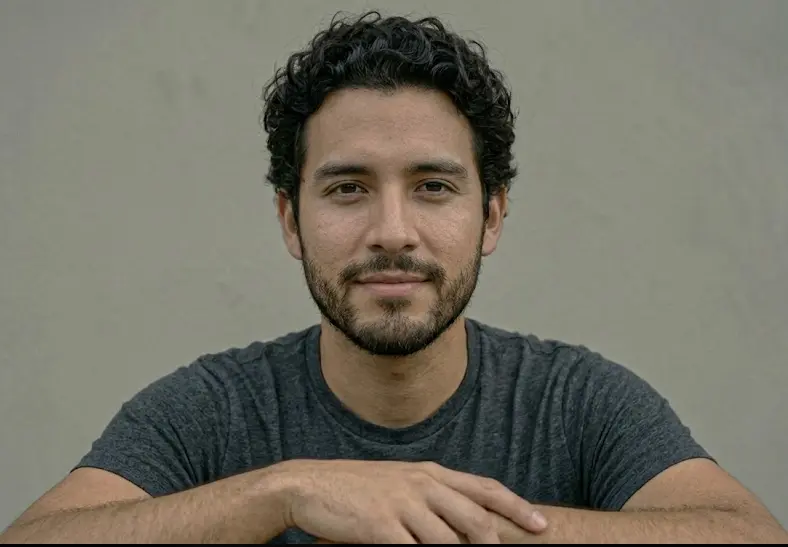
Ventral fronting — chest directed fully forward, relaxed forward lean, direct gaze. The open orientation signals trust and genuine engagement.
Of all the ways the body communicates interest, trust, and genuine engagement, ventral fronting is among the most telling — and the least consciously managed. When a person turns their chest and torso directly toward you, they are exposing the most biologically vulnerable region of the body: the front, where the vital organs sit closest to the surface. That exposure is not a minor detail. It is, at the level of the limbic system, a signal that the brain has assessed the situation as safe. Former FBI agent and nonverbal communication expert Joe Navarro, who introduced the terms ventral fronting and ventral denial in his book What Every Body Is Saying, describes the torso as the body's billboard — a reliable, relatively unfiltered display of how a person truly feels about who they are with and what is being said. This page is part of the body language resources available through our free cognitive training tools and the Mind hub.
Unlike facial expressions, which most people have some degree of conscious control over, torso orientation tends to follow emotional states automatically. People move toward what they like and away from what they don't — a pattern visible across the entire lifespan, from newborns turning toward the warmth of a parent to adults angling their bodies away from a conversation partner they find disagreeable. The shift is often subtle, sometimes as little as a few degrees, but it is consistent and meaningful.
What Does Ventral Fronting Mean? The Psychology Behind It
The term "ventral" refers to the front of the body — the chest, abdomen, and stomach region. "Fronting" means orienting this surface directly toward another person or object of interest. Together, ventral fronting describes the postural choice to face someone squarely with the open front of the body, rather than angling away, turning sideways, or placing the torso in a more protected orientation.
The psychological basis for why this signal is meaningful goes back to evolutionary biology. The ventral side of the human body houses the heart, lungs, liver, and digestive organs — none of which are protected by bone on the front. Exposing this region, even in a social context where no physical threat is present, represents a limbically-driven assessment of safety. We do not expose our front to people we distrust, fear, or dislike. When the body angles away — a configuration Navarro calls ventral denial — it is the same protective system working in reverse: the torso turns to shield the vulnerable front and reduce exposure to the perceived source of discomfort.
Research on body orientation and interpersonal communication supports this interpretation. Studies examining how body orientation maps onto affiliation and attraction consistently find that people direct their torso toward those they feel positively about and away from those they do not. A study by Wada (1988), published in Shinrigaku Kenkyu, measured body orientation, body lean, eye contact, and head orientation simultaneously during natural interactions and found that both body orientation and forward lean were directly affected by liking — people positioned their bodies more openly toward those they liked, consistently across participants. The body, in other words, communicates a relational state that the words may not.
What makes ventral fronting particularly useful for reading people is that it operates below the level of most people's social self-monitoring. A person can control their facial expression, choose their words carefully, and modulate their tone of voice. Far fewer people pay attention to which direction their torso is pointing — and even when they do, sustaining an artificially fronted position toward someone they dislike is difficult to maintain naturally over the course of a conversation.
What Does Ventral Fronting Mean in Different Contexts?
Romantic and social attraction — in attraction contexts, ventral fronting is one of the earliest and most consistent approach signals. A person who is drawn to someone will gradually reorient their torso toward them, often beginning with a lean before the full body follows. This is frequently accompanied by other engagement cues — reduced interpersonal distance, increased eye contact, and in some cases preening behaviors. The key feature is the direction of the movement: the body works toward, not away. A conversation partner who begins at a slight angle and progressively squares up their torso over the course of an interaction is displaying increasing comfort and interest, even if nothing explicit has been said.
Professional agreement and engagement — in meetings and business contexts, ventral fronting reliably tracks who agrees with what is being said and who does not. When a point lands well, listeners will typically move slightly forward and orient their torsos more directly toward the speaker. When a proposal meets resistance, torsos begin to angle subtly away — sometimes accompanied by a backward lean, crossed arms, or the appearance of objects placed across the front of the body. Navarro's observations from interview and negotiation contexts suggest that tracking these shifts in body orientation provides an accurate read of the emotional temperature of the room, often well before any verbal disagreement surfaces.
Group dynamics — in a group of three or more people, ventral orientation is one of the clearest ways to identify who is connected to whom. People who are engaged in genuine dialogue will close their bodies toward each other, while someone standing at the edge of a conversation who feels excluded or uninterested will angle their torso outward. Similarly, when a new person arrives who is of high interest to one member of the group, that person's torso will often begin to shift toward the newcomer before their face does — a reliable indicator of where the real attention has moved.
Authority and power dynamics — full ventral fronting toward a superior or authority figure can indicate deference, openness, and a desire to be evaluated positively. It signals nothing to hide and a willingness to be assessed. In contrast, ventral fronting from a position of higher status toward someone lower in a hierarchy often reads as a signal of engagement and genuine interest — an indication that the higher-status person considers the interaction worth their full attention.

Left: Ventral fronting — chest and gaze directed fully forward, signaling openness and engagement. Right: Ventral denial — torso and gaze turned away, signaling disengagement or distraction.
Ventral fronting tells you where someone's interest really lies. The Body Language Test below ↓ trains you to read full-body signals like this alongside facial expressions and gestures.
Ventral Fronting & Deception: What It Reveals About Genuine vs Performed Interest
Ventral fronting is one of the most resistant body language signals to deliberate manipulation, which makes it especially useful in contexts where verbal communication may not be reliable. Someone can tell you they are interested and engaged while their torso is gradually angling away from you. Someone can appear to be paying attention while their feet point toward the exit and their chest faces the door. The disconnect between what is being said — or what the face is performing — and what the torso is communicating is one of the more diagnostic incongruences available in reading people.
Navarro notes that the limbic system drives ventral orientation automatically and continuously, adjusting the body's position in real time as emotional states shift. When discomfort arises — from a topic, a question, a person, or a piece of information — the torso begins to angle away before the person may even register the discomfort consciously. This means that tracking torso orientation over the course of a conversation, rather than just reading a snapshot, provides a continuous readout of how the interaction is landing emotionally.
In interrogation and investigative contexts, ventral denial — the absence of fronting, or active angling away — has been observed to increase when subjects are asked questions they find threatening or uncomfortable. This does not mean that ventral denial equals deception: it may equally indicate genuine distress, embarrassment, or discomfort with a topic that has nothing to do with dishonesty. What it signals reliably is that something in the interaction has been registered as threatening, and the body is responding accordingly. Understanding what that "something" is requires reading the full context, not just the torso position alone.
Ventral Fronting vs Similar Signals
Ventral fronting vs expanded posture — expanded posture involves widening the body and taking up more space, communicating confidence and dominance. Ventral fronting is about the direction the torso faces, not its size or openness. A person can display ventral fronting while maintaining a relatively compact posture, and conversely, a person can take up a great deal of space while directing their ventral side away from others. The two signals often occur together in highly engaged, confident individuals, but they measure different dimensions of the postural message.
Ventral fronting vs collapsed posture — collapsed posture involves caving the chest inward and making the body smaller, which is the opposite of open ventral exposure. Collapsed posture signals defeat, shame, or low confidence, and in doing so often reduces ventral exposure incidentally. The difference is that ventral fronting specifically concerns orientation toward another person, while collapsed posture is primarily about the relationship between the person and their own sense of self in the moment. A collapsed posture may occur while still facing someone directly; ventral denial may occur while maintaining a relatively upright posture.
Ventral fronting vs crossed arms — crossed arms create a physical barrier across the ventral region without changing the direction the torso is facing. This is a form of ventral covering — reducing the exposure of the front without fully turning away — and tends to be a milder signal than full ventral denial. A person may be facing you directly while crossing their arms, indicating general engagement but with some degree of guardedness. Crossed arms combined with a torso that is also angling away represents a stronger disengagement signal than either alone. Reading the two together provides a more complete picture of the person's comfort level.
Ventral fronting vs head tilt — the head tilt is a face-level engagement signal, often associated with listening, curiosity, and openness. It is possible for the head and face to point toward someone with apparent engagement while the torso is angled away — a configuration that frequently indicates performed attention rather than genuine interest. When the head tilt and ventral fronting co-occur, pointing in the same direction and toward the same person, the engagement signal is considerably stronger. When they conflict, trust the torso.
How to Spot Ventral Fronting Accurately
The first step is identifying the reference angle — where the person's torso was pointing at the beginning of the interaction, or when no particular emotional state was present. People carry natural asymmetries in how they stand and sit, and some individuals habitually rest in a slightly angled position. Reading ventral fronting accurately means tracking changes from that individual baseline, rather than applying an absolute standard of "fully face-on equals interested."
The second step is tracking direction of change over time. A torso that is gradually moving toward you — incrementally squaring up, reducing the angle between you, closing the physical and postural distance — is displaying increasing engagement, even if it never reaches full fronting. A torso that begins face-on and progressively angles away is communicating a shift in the internal state, regardless of what the face or the words may be doing. The direction of movement is often more informative than the current position.
The third step is reading the cluster. Ventral fronting is most meaningful when it is congruent with other engagement signals: forward lean, open posture, eye contact, head orientation all pointing in the same direction. When all these signals align toward you, the message is unambiguous. When ventral fronting appears in isolation — the torso facing you while the feet, gaze, and arms point elsewhere — the picture is more complex and more interesting. The brow furrow, lip compression, and other facial signals often provide the emotional context that explains what the torso orientation is responding to.
Learning to track the torso alongside the face — treating them as two separate but related channels of information — significantly improves the accuracy of body language reading. Most people automatically focus on the face during conversation, which is exactly why the torso provides such useful additional data: it is largely unmonitored, both by the person displaying it and by most observers. Developing the habit of widening your attention to include posture and orientation is a trained skill, and one that the test below helps develop through repeated exposure and feedback.
How Much Body Language Can You Read?
Ventral fronting is one signal in a much larger vocabulary. The test below covers the full range of expressions, gestures, and postures — with detailed explanations after every answer to help you build a more accurate read of people.