Defensive Driving May not be enough: Why Reaction Time Matters and How to Train It
If you have ever had a traffic accident while driving, you probably know how terrible it feels. I have that experience myself.
When I was a medical student, I was driving to a restaurant to meet my tutor. It was a rainy evening. I tried to turn on a green light, and there was a teenager on a bike, just rushing through right next to me. I hit the brakes very hard, but it was too late. The bumper of my car hit him and his bike. It was one of the worst memories of my life.
Fortunately for both of us, the only real damage was to the bike. Even though he had some scratches, he was fine. Later, after getting cleared by the doctor, he ran around for me to show me he was really okay. A good kid.
But thinking back, it could have been worse. If I had seen the kid even 0.5 seconds later, or if my reaction had been even 0.5 seconds slower, it might have been critical. So, my vision—especially peripheral vision—and reaction time played a crucial role.
Defensive Driving Is Important, But May Not Be Enough
Now, you might have expected this article to talk about defensive driving (also called protective driving). Many resources teach you how important it is to control your speed, pay attention, be prepared for unexpected events, and avoid distractions. But this is basic. You probably know all of that without being told, whether or not you actually implement it.
I am not denying that these are important. For example, I fully agree that it is crucial to focus on driving without doing anything else. You might think it's a bit overboard, but I believe even listening to the radio or an audiobook is risky.
Why? Because study after study shows that multitasking lowers the quality of each task. It means that even though you might be able to do two things at the same time, you cannot do either as well as when you do only one. Your brain is not designed to split focus effectively.
But defensive driving is just the foundation. As I described, you have to always be prepared for unexpected things. The real question is: what makes the difference between a near miss and an actual accident? It's how quickly and effectively you deal with that unexpected event.
An Added Approach to Even Safer Driving
Yes, you might already drive decently. But unexpected things still happen. A kid might run right in front of you. A box might fall off the top of a truck. If something like this happens, "defensive driving" alone won't save you. Your reaction time is everything. And the good news is: you can train that.
Think about professional race car drivers. They don't just know how to steer—they have trained their reaction times to be significantly faster than average. The same principle applies to everyday driving. The faster you can process what you see and respond, the more distance you create between a close call and a disaster.
Here is a completely free app that trains your reaction speed. No login, no subscription—just open it and start training. You can use it like a game, and over time, you will notice your reactions becoming faster.
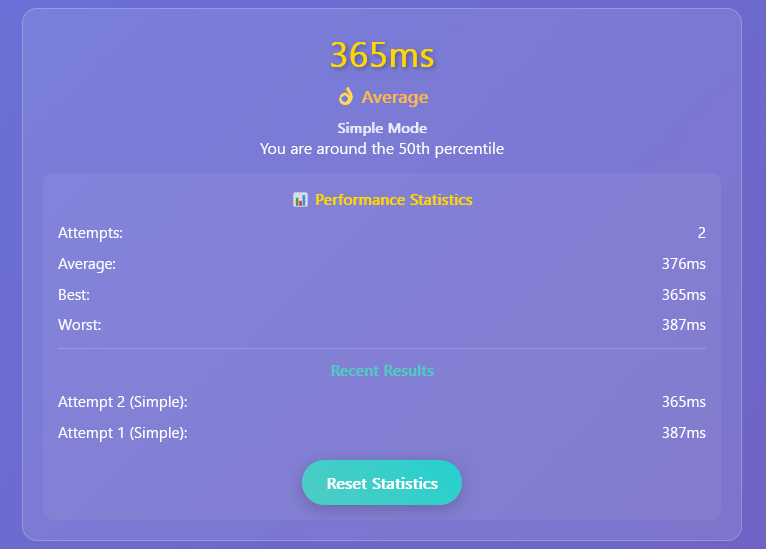
There are also other reaction training apps on the site, each focusing on different aspects—visual reactions, audio reactions, and more. The variety helps because real driving situations require you to react to all kinds of stimuli.
With defensive driving habits AND trained reaction speed, your driving will be significantly safer. You are not just relying on knowing what to do—you are building the physical ability to actually do it in time.
P.S. About That Multitasking Thing
Earlier, I mentioned that multitasking lowers your performance on each task. You might be skeptical. After all, you've probably driven while listening to music or having a conversation thousands of times.
But here's the thing: you don't notice the performance drop because you have nothing to compare it to. Want to see it for yourself? Try this app (also free, no login needed). It lets you do a reaction speed test while playing a simple game on the side. I guarantee your response time will be significantly slower.
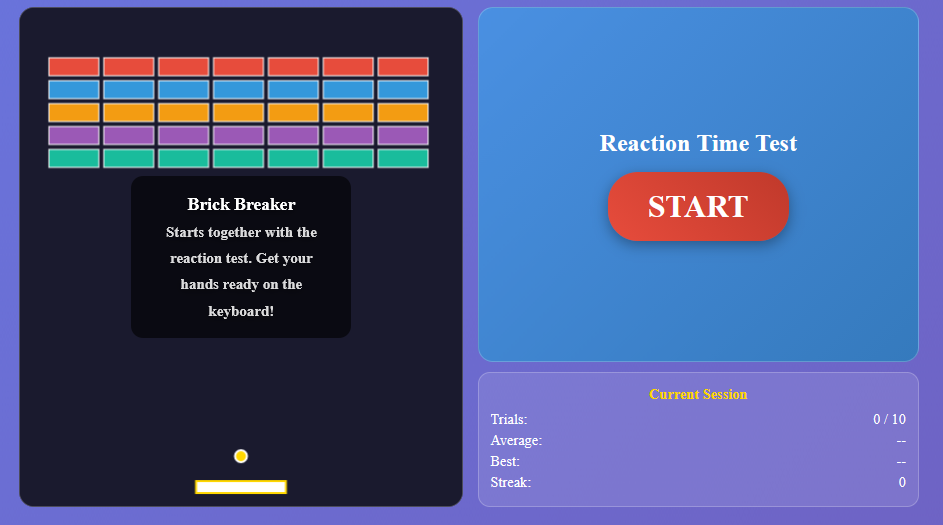
One quick note: you can actually get better at multitasking through training with apps like this. But here's the catch—even with training, you will never perform either task as well as when you focus on just one. Your brain simply doesn't work that way. So while multitasking training has its uses, the safest approach while driving is still: don't do it.
See for yourself. Test your reaction time alone, then test it while multitasking. The numbers don't lie.